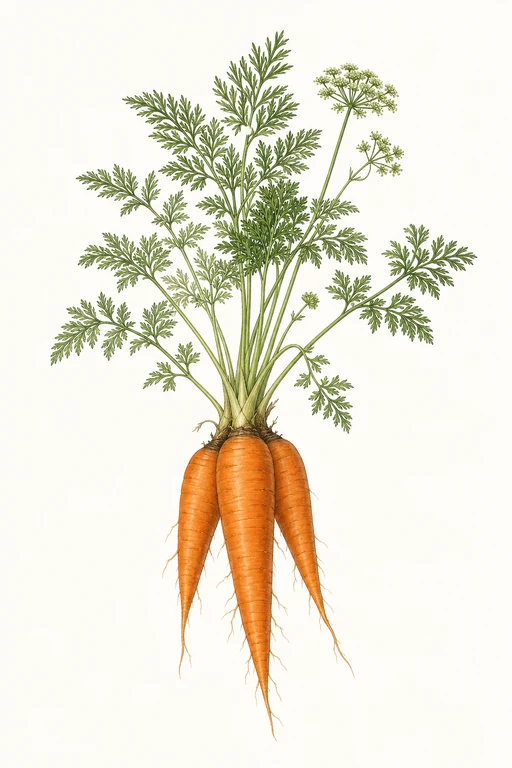
Danvers 126
70d to harvest
Sweet, carrot-scented earthiness meets a bright, honeyed crunch in Danvers 126—an heirloom-style Danvers Carrot prized for its rich flavor and dependable performance. At maturity, the roots develop a classic tapered shape with a smooth, firm texture and a vivid orange core that stays tender and flavorful. Ideal for roasting trays, fresh snacking, and vibrant sauces, Danvers 126 brings reliable color and satisfying bite to every garden harvest.
Crop Dates
| Milestone | Date |
|---|---|
| Start Indoors | Direct Sow |
| Last Frost | May 13th |
| Transplant / Sow Outdoors | May 13th |
| Harvest Begins | Jul 22nd |
| Harvest Ends | Sep 27th |
Crop Details
| Trait | Value |
|---|---|
| Days to Maturity | 70 |
| Sun Requirements | Full Sun |
| Growth Habit | Taproot |
| Support Needed | None |
| Planting Depth | Normal |
| Germination Temp (°F) | 70 |
| Min Soil Temp (°F) | 45 |
| Min Night Temp (°F) | 28 |
| Harden Off (days) | Not Required |
Recommended Companions
Frequently Asked Questions
What pest or disease problem commonly affects Daucus carota (carrot) and how can I manage it?
Carrots (Daucus carota) are frequently damaged by carrot rust fly, whose larvae tunnel into roots. Cover seeded beds with fine insect netting until the tops reach about 6–8 in tall, keep the soil lightly worked to disrupt egg-laying, and remove any infested, forked, or hollow-root carrots promptly so the life cycle doesn’t continue.
How do I tell when Danvers 126 carrots are ready to harvest?
Harvest around 70 days after sowing, but start checking early by gently pulling one carrot to gauge root size. Danvers 126 is ready when the shoulders are well-formed and the roots are thick enough to fill the bed’s expected diameter; don’t wait for tops to look wilted, since over-aged roots can get woody.