
Dino Gourd
Bottle Gourd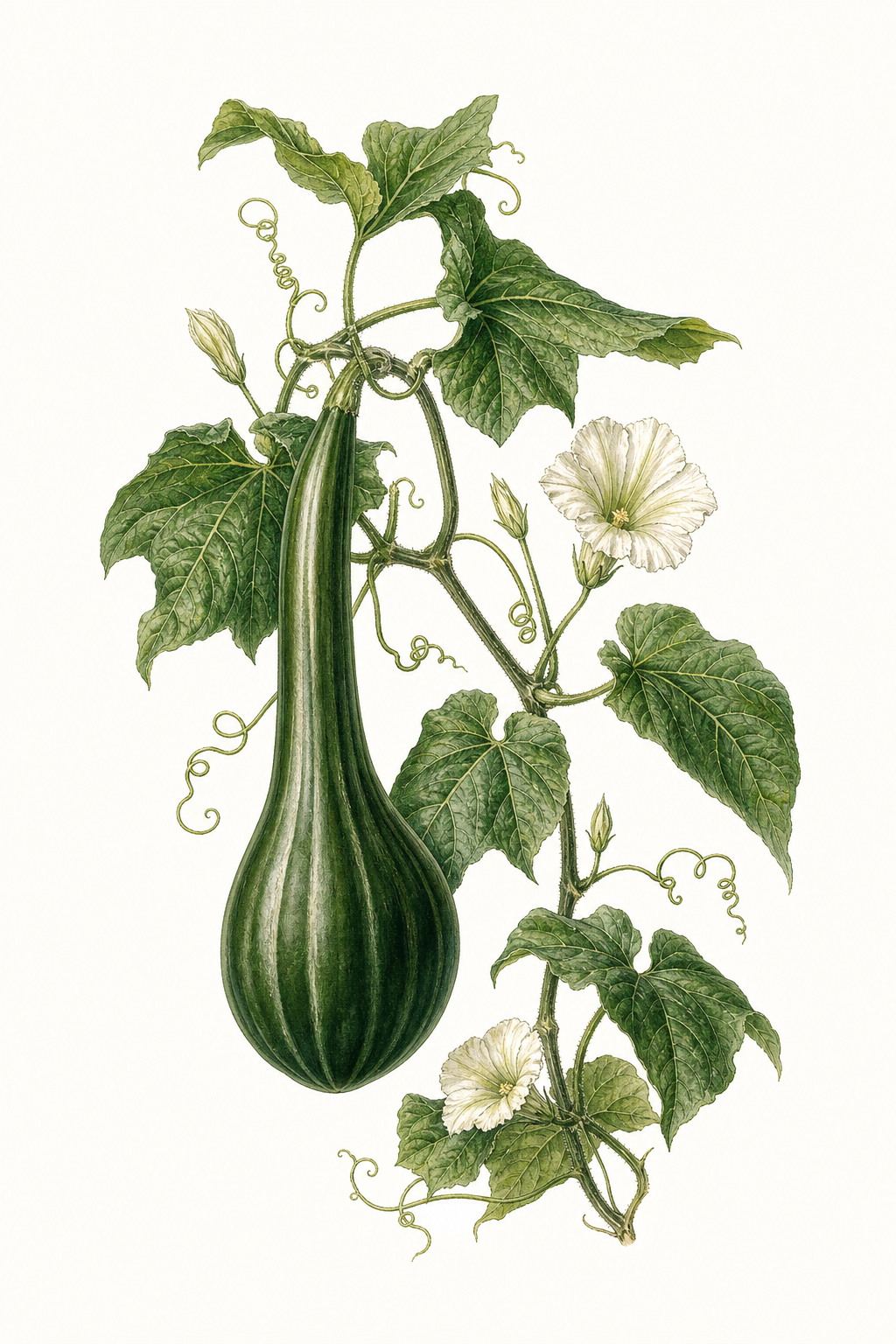
Sink your senses into Dino Gourd’s long, elegant bottles—sleek, ridged, and sun-warmed with a deep, mellow green that deepens as …
Crop Dates
| Milestone | Date |
|---|---|
| Start Indoors | May 20th |
| Last Frost | May 13th |
| Transplant / Sow Outdoors | Jun 3rd |
| Harvest Begins | Sep 21st |
| Harvest Ends | Sep 27th |
Crop Details
| Trait | Value |
|---|---|
| Days to Maturity | 110 |
| Sun Requirements | Full Sun |
| Growth Habit | Vine |
| Support Needed | Trellis |
| Planting Depth | Normal |
| Germination Temp (°F) | 70 |
| Min Soil Temp (°F) | 65 |
| Min Night Temp (°F) | 55 |
| Harden Off (days) | 12 |
Recommended Companions
Frequently Asked Questions
How can I manage powdery mildew on Lagenaria siceraria (dino gourd), especially in humid weather?
How often should I water Lagenaria siceraria during the main growing phase, and what soil moisture level should I keep?
How do I tell when Lagenaria siceraria (dino gourd) is ready to harvest for hard “dipper” use?
Sink your senses into Dino Gourd’s long, elegant bottles—sleek, ridged, and sun-warmed with a deep, mellow green that deepens as it matures. The flesh is tender and pleasantly mild, with a fine, juicy texture that holds its shape beautifully for everyday culinary favorites, from roasting to fresh preparations and savory sauces. Grow this vigorous bottle gourd for a season-long harvest of distinctive forms that look as good in the garden as they perform on the plate.
Sowing Tips

Transplant Conditions
Wait until soil reaches 65°F and nights stay above 55°F before moving outdoors. Harden off for 12 days first.

Direct Sow Preferred
Sensitive roots — does not transplant well. If starting indoors, use biodegradable pots and disturb roots as little as possible when moving outdoors.
Expert Note

Warm the soil well and give plenty of space; bottle gourds grow best with consistent moisture while young, then taper watering as the fruit matures for better drying.