SproutSmart
SproutSmart Intelligent Garden Sowing

Doone Valley Thyme

Thyme
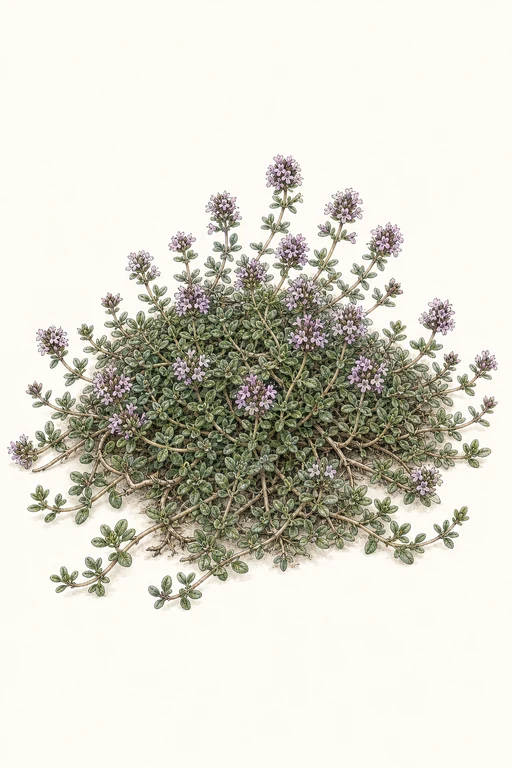
Botanical illustration of Doone Valley Thyme
🌱 90d to harvest Spreading

Breathe in the unmistakable, cool-mint perfume of Doone Valley Thyme—an aromatic creeping selection with a low, spreading habit a…

Planting Schedule

Add Doone Valley Thyme to your garden to build a schedule and get reminders.

Crop Dates

MilestoneDate
Start IndoorsApr 1st
Last FrostMay 13th
Transplant / Sow OutdoorsMay 6th
Harvest BeginsAug 4th
Harvest EndsSep 27th

Crop Details

TraitValue
Days to Maturity90
Sun RequirementsFull SunFull sun
Growth HabitSpreading
Support NeededNone
Planting DepthSurface
Germination Temp (°F)65
Min Soil Temp (°F)45
Min Night Temp (°F)35
Harden Off (days)7

Frequently Asked Questions


What pest or disease commonly affects Thymus serpyllum (creeping thyme), and how do I treat it?
The most common problem is root rot from constantly wet soil, often showing up as wilting and blackening at the base. Improve drainage immediately, water only when the top 1/2–1 inch of soil is dry, and thin plants to increase airflow; if foliage looks infected, remove affected sections and avoid overhead watering. If you notice gray, fuzzy growth on stems, cut back infected tips and keep foliage dry to prevent spread.
How often should I water Thymus serpyllum during its main growing phase?
During active growth, water deeply but infrequently—typically once every 7–14 days depending on heat—so the soil dries slightly between waterings. Aim for dry, well-drained soil like a sunny rockery; thyme in Lamiaceae rarely needs frequent moisture and will struggle in waterlogged beds. After plants are established, reduce watering further and only supplement during extended dry spells.
How can I tell when Thymus serpyllum is ready to harvest (and for best flavor)?
Harvest once plants reach full, dense growth (about 90 days) and before they form many flowers; leaves are most aromatic just before flowering. You can snip sprigs any time, but for a peak harvest, take cuttings in the morning after dew has dried. If you want the strongest flavor, take a light first cut before most stems bloom, then follow with a smaller second harvest.
Botanical illustration of Doone Valley Thyme

Breathe in the unmistakable, cool-mint perfume of Doone Valley Thyme—an aromatic creeping selection with a low, spreading habit and finely textured leaves that release their fragrance at every touch. At maturity it forms a dense, mat-like carpet with tiny, lavender-pink blooms that add both color and pollinator appeal. Ideal for garden borders and rockeries, it’s a fragrant cornerstone for flavor-forward plantings and aromatic bundles throughout the growing season.

Sowing Tips

Transplant Conditions

Wait until soil reaches 45°F and nights stay above 35°F before moving outdoors. Harden off for 7 days first.

Expert Note

For best golden variegation, grow creeping thyme in full sun and lean (not fertilized heavily) well-drained soil; let plants dry slightly between waterings.