
Korean Radish (Mu)
Radish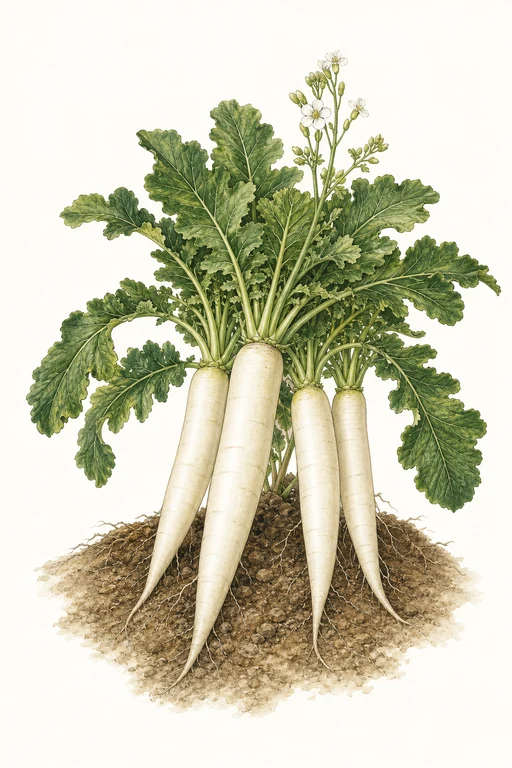
Crisp and luminous from the first bite—Korean Radish (Mu) develops a clean, bright bite with a gently sweet, watery snap. At matu…
Crop Dates
| Milestone | Date |
|---|---|
| Start Indoors | Direct Sow |
| Last Frost | May 13th |
| Transplant / Sow Outdoors | May 13th |
| Harvest Begins | Jul 2nd |
| Harvest Ends | Sep 27th |
Crop Details
| Trait | Value |
|---|---|
| Days to Maturity | 50 |
| Sun Requirements | Full Sun |
| Growth Habit | Taproot |
| Support Needed | None |
| Planting Depth | Normal |
| Germination Temp (°F) | 70 |
| Min Soil Temp (°F) | 40 |
| Min Night Temp (°F) | 28 |
| Harden Off (days) | Not Required |
Recommended Companions


Frequently Asked Questions
What are common pests or diseases for Raphanus sativus (Korean radish), and how can I control them?
How often should I water Korean radish during the main growing phase (around weeks 2–6)?
How do I tell when Korean radish (Raphanus sativus) is ready to harvest?
Crisp and luminous from the first bite—Korean Radish (Mu) develops a clean, bright bite with a gently sweet, watery snap. At maturity (about 50 days), the roots form smooth, elongated cylinders with a pale, ivory finish and a tender, fine-grained texture that stays refreshingly crisp. Grow Mu for fresh slicing and quick pickling, where its mild character shines in bright, tangy preparations.
Sowing Tips

Transplant Conditions
Wait until soil reaches 40°F and nights stay above 28°F before moving outdoors.
Expert Note

Direct sow Korean radish in consistently moist soil and harvest promptly for best crispness—quality drops if roots get oversized.