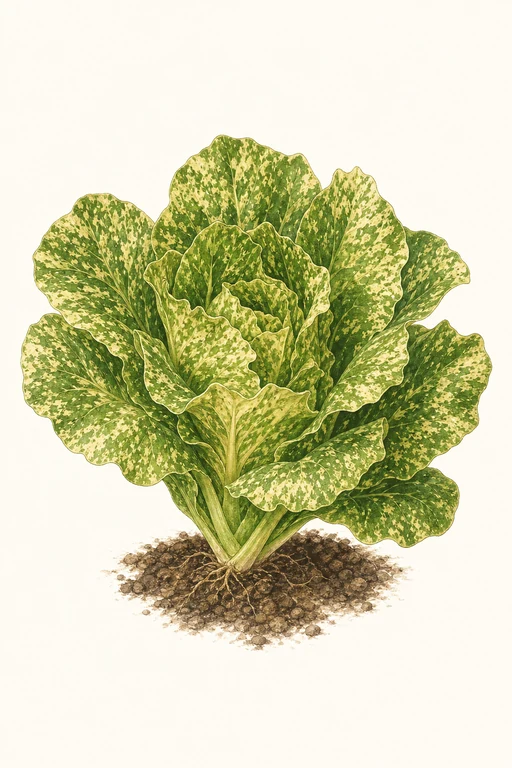
Mottistone
Lettuce
🌱 55d to harvest
Rosette
Unfurl Mottistone and savor its unmistakable, garden-bright charm: crisp, broad leaves with a mottled, buttery-green base brushed…
Crop Dates
| Milestone | Date |
|---|---|
| Start Indoors | Apr 15th |
| Last Frost | May 13th |
| Transplant / Sow Outdoors | May 13th |
| Harvest Begins | Jul 7th |
| Harvest Ends | Sep 27th |
Crop Details
| Trait | Value |
|---|---|
| Days to Maturity | 55 |
| Sun Requirements | Part Sun |
| Growth Habit | Rosette |
| Support Needed | None |
| Planting Depth | Surface |
| Germination Temp (°F) | 70 |
| Min Soil Temp (°F) | 45 |
| Min Night Temp (°F) | 35 |
| Harden Off (days) | 6 |
Recommended Companions
Frequently Asked Questions
What’s a common pest or disease problem for Lactuca sativa (leaf/batavian-type lettuce), and how do I control it?
A frequent issue is lettuce downy mildew, which shows as pale yellow patches on the top of leaves with a gray-purple mold on the underside. Improve airflow (don’t crowd plants), water at the soil line in the morning, and avoid wet foliage; remove and discard infected plants early to slow spread. If problems persist, use an appropriate fungicide labeled for lettuce downy mildew and restart with fresh seed if you notice repeated outbreaks.
During the main growing phase, how often should I water Lactuca sativa so it stays crisp and doesn’t go bitter?
For Lactuca sativa, keep the top 1–2 inches of soil consistently moist, not soggy, to support steady leaf growth and prevent tip-burn and bitterness. In warm weather, this usually means watering deeply 2–4 times per week, increasing frequency if the soil dries quickly under part-sun conditions. Mulch lightly after plants establish to reduce moisture swings, because lettuce reacts fast to drying out.
How can I tell when mottistone lettuce (Lactuca sativa) is ready to harvest?
Harvest when heads/leaves reach their expected size for your spacing and the leaves are firm and fully colored, typically around 55 days from sowing. For leaf harvest, pick outer leaves when they’re large enough to eat and leave the center to continue producing. If you see rapid stem elongation (bolting) or the leaves become noticeably more bitter and loose, harvest immediately.