
North Georgia Candy Roaster
Winter Squash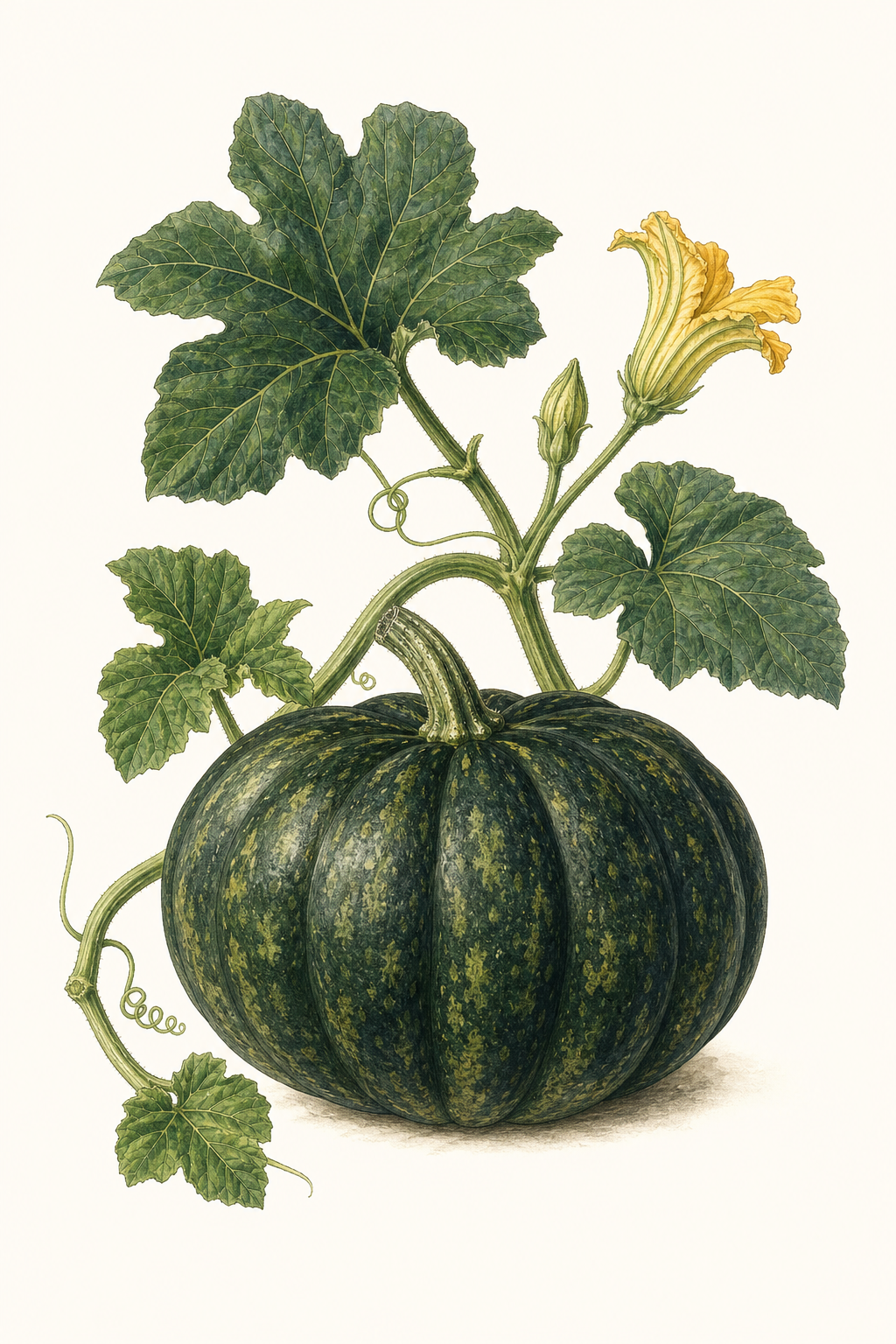
Sink your spoon into North Georgia Candy Roaster’s rich, sun-baked sweetness—flesh turns luxuriously thick and velvety, with a wa…
Crop Dates
| Milestone | Date |
|---|---|
| Start Indoors | May 20th |
| Last Frost | May 13th |
| Transplant / Sow Outdoors | Jun 3rd |
| Harvest Begins | Sep 6th |
| Harvest Ends | Sep 27th |
Crop Details
| Trait | Value |
|---|---|
| Days to Maturity | 95 |
| Sun Requirements | Full Sun |
| Growth Habit | Vine |
| Support Needed | Trellis |
| Planting Depth | Normal |
| Germination Temp (°F) | 65 |
| Min Soil Temp (°F) | 65 |
| Min Night Temp (°F) | 55 |
| Harden Off (days) | 12 |
Recommended Companions
Frequently Asked Questions
What pest or disease most often troubles Cucurbita maxima (Candy Roaster) in North Georgia, and how do I control it?
How often should I water Cucurbita maxima during the main growing phase?
How can I tell when my North Georgia Candy Roaster (Cucurbita maxima) is ready to harvest?
Sink your spoon into North Georgia Candy Roaster’s rich, sun-baked sweetness—flesh turns luxuriously thick and velvety, with a warm, caramel-leaning flavor that lingers like roasted orchard fruit. The rind matures to a deep, mottled green with a candy-roaster’s classic, softly fluted silhouette, offering sturdy, satisfying texture that shines in hearty winter fare. Grow it for dependable late-season harvests and a centerpiece squash that’s as rewarding to grow as it is to savor in roasted wedges, creamy purées, and slow-simmered sauces.
Sowing Tips

Transplant Conditions
Wait until soil reaches 65°F and nights stay above 55°F before moving outdoors. Harden off for 12 days first.

Direct Sow Preferred
Sensitive roots — does not transplant well. If starting indoors, use biodegradable pots and disturb roots as little as possible when moving outdoors.
Expert Note

Start seeds only when warm—use row cover early and give plants lots of space since squash vines quickly sprawl.