SproutSmart
SproutSmart Intelligent Garden Sowing

Pepperoncini

Pepper
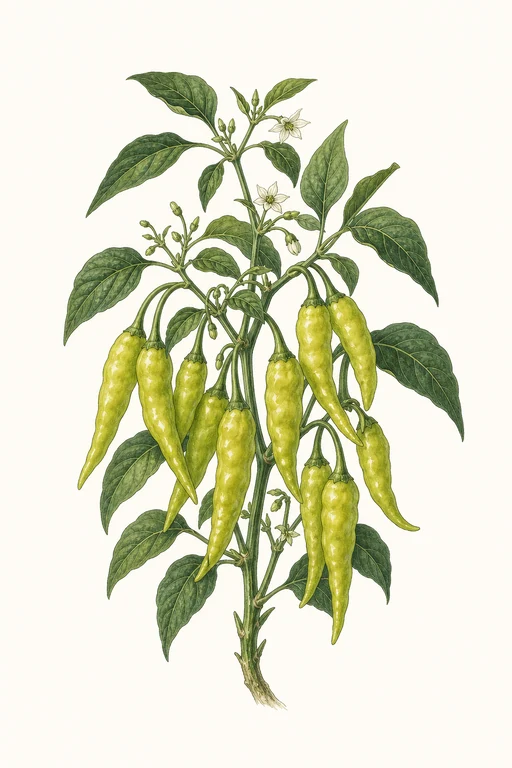
Botanical illustration of Pepperoncini
🌱 75d to harvest Bush

Sweetly piquant Pepperoncini brings a bright, peppery snap with a gentle, tangy warmth that lingers like sun on green fruit. At m…

Planting Schedule

Add Pepperoncini to your garden to build a schedule and get reminders.

Crop Dates

MilestoneDate
Start IndoorsMar 25th
Last FrostMay 13th
Transplant / Sow OutdoorsJul 8th
Harvest BeginsSep 21st
Harvest EndsSep 27th

Crop Details

TraitValue
Days to Maturity75
Sun RequirementsFull SunFull sun
Growth HabitBush
Support NeededCage
Planting DepthNormal
Germination Temp (°F)80
Min Soil Temp (°F)60
Min Night Temp (°F)50
Harden Off (days)10

Frequently Asked Questions


What pest or disease most commonly affects Capsicum annuum (pepperoncini), and how do I control it?
Watch for aphids and spider mites, especially in hot, dry weather, because they can stunt growth and cause curled leaves. Spray pepper plants with a strong jet of water to knock pests off, then follow with insecticidal soap (apply to both leaf sides) every 5–7 days until you stop seeing new damage. If you notice wilt that spreads from the base or patchy leaf yellowing with poor vigor, remove affected plants promptly and avoid replanting peppers in the same spot to reduce recurring soil-borne problems.
How often should I water pepperoncini during the main growing phase, and what soil moisture level should I maintain?
During flowering and fruit set (roughly from when plants start producing until harvest), keep the soil evenly moist but never waterlogged. Water about 1–2 times per week with enough depth to wet the root zone; increase frequency during heat waves so the soil doesn’t dry out completely. A simple check is to water when the top 1 inch of soil feels dry—pepperoncini will drop flowers if the soil swings too dry.
How can I tell when pepperoncini are ready to harvest?
Harvest when the fruits are fully sized and firm, typically around 70–80 days after transplanting for Capsicum annuum, depending on your conditions. For a classic pepperoncini flavor, pick when pods are fully elongated and mostly green (you can leave some to ripen more if you want deeper sweetness). If the peppers easily detach with a gentle twist and the skin looks taut and glossy, they’re ready—overripe peppers will start to wrinkle or soften.
Botanical illustration of Pepperoncini

Sweetly piquant Pepperoncini brings a bright, peppery snap with a gentle, tangy warmth that lingers like sun on green fruit. At maturity, the slender peppers hang in tidy clusters, offering crisp, tender flesh and a pleasantly firm bite—ideal for preserving and for briny, vinegar-forward preparations where their mild heat shines. Grow Pepperoncini for a dependable harvest of uniform, pickling-ready peppers that look as good as they taste in the jar.

Sowing Tips

Transplant Conditions

Wait until soil reaches 60°F and nights stay above 50°F before moving outdoors. Harden off for 10 days first.

Expert Note

Start seeds early for a long pickling season, then transplant into soil that’s consistently warm (around 60°F+) and harvest green for best tang.