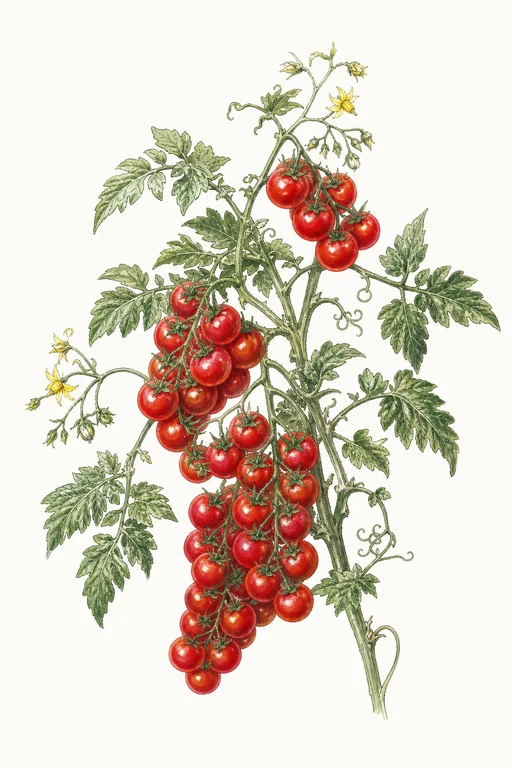
Sweet Treats
Tomato
🌱 60d to harvest
Determinate
Sweet Treats bursts with a glossy, candy-bright sweetness—small fruits that ripen to a warm, sunset-red sheen and taste like sun-…
Crop Dates
| Milestone | Date |
|---|---|
| Start Indoors | Mar 25th |
| Last Frost | May 13th |
| Transplant / Sow Outdoors | Jul 8th |
| Harvest Begins | Sep 6th |
| Harvest Ends | Sep 27th |
Crop Details
| Trait | Value |
|---|---|
| Days to Maturity | 60 |
| Sun Requirements | Full Sun |
| Growth Habit | Determinate |
| Support Needed | Cage |
| Planting Depth | Deep |
| Germination Temp (°F) | 70 |
| Min Soil Temp (°F) | 60 |
| Min Night Temp (°F) | 50 |
| Harden Off (days) | 10 |
Recommended Companions
Frequently Asked Questions
What pest or disease is most likely on Solanum lycopersicum (cherry/tomato type), and how do I manage it?
Watch for early blight (brown concentric spots on older leaves) and leaf-curling from tomato hornworm or aphids. Remove and destroy heavily spotted lower leaves, then spray with a copper-based fungicide if new spots appear; for hornworms, hand-pick in the evening and spot-treat with Bt if needed. Keep foliage dry by watering at the soil line and increase airflow with wider spacing to slow reinfection.
How often should I water Solanum lycopersicum during peak fruiting to keep fruit from splitting or wilting?
During active flowering and fruit set, keep the root zone evenly moist—typically about 1 to 2 inches (2.5–5 cm) of water per week total, adjusted for heat and container size. Water deeply when the top 1 inch (2.5 cm) of soil is dry, rather than frequent light sprinkles, to prevent blossom-end rot and reduce fruit cracking. In hot spells, you may need an extra deep watering so plants don’t cycle between drought and saturation.
How can I tell when Solanum lycopersicum is ready to harvest (around 60 days)?
Harvest when fruits are fully colored for the variety (no green shoulders) and the skin is glossy and firm but slightly soft when gently squeezed. Pick cherry tomatoes at peak ripeness; they should taste sweet and develop fully colored seeds inside rather than still-looking pale gel. If temperatures spike, check plants every 1–2 days to catch overripe fruit before cracking.