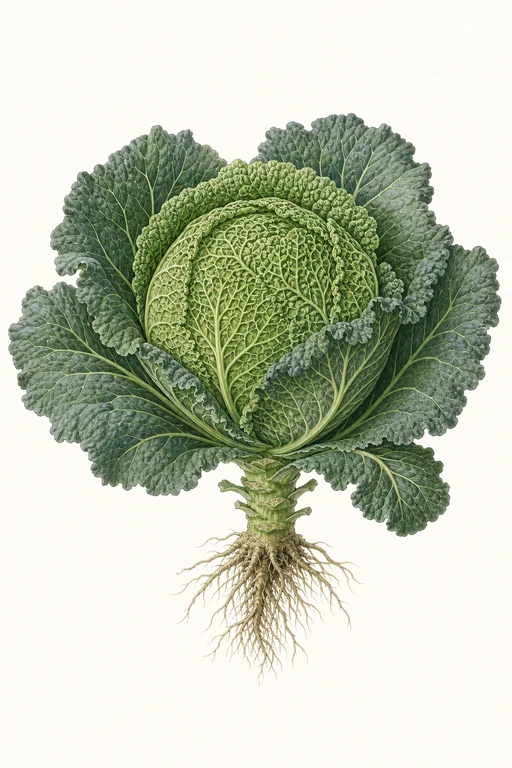
Verona Savoy
75d to harvest
Velvet-deep savoy folds unfurl into a dense, apple-green head with a softly crinkled surface that catches the light like fine lace. Verona Savoy delivers a sweet, mild flavor and a tender, succulent bite—ideal for showcasing in hearty seasonal dishes where its texture can shine. Grow it for reliable, 75-day maturity and a beautiful, uniform head that looks as good as it tastes.
Crop Dates
| Milestone | Date |
|---|---|
| Start Indoors | Apr 15th |
| Last Frost | May 13th |
| Transplant / Sow Outdoors | May 6th |
| Harvest Begins | Jul 20th |
| Harvest Ends | Sep 27th |
Crop Details
| Trait | Value |
|---|---|
| Days to Maturity | 75 |
| Sun Requirements | Full Sun |
| Growth Habit | Rosette |
| Support Needed | None |
| Planting Depth | Normal |
| Germination Temp (°F) | 75 |
| Min Soil Temp (°F) | 45 |
| Min Night Temp (°F) | 32 |
| Harden Off (days) | 6 |
Recommended Companions
Frequently Asked Questions
What disease problem is most common for Brassica oleracea var. capitata (savoy cabbage), and how can I stop it?
Watch for black rot (Xanthomonas) and leaf spot during cool, damp weather—symptoms include yellow V-shaped patches on leaves and dark, decaying spots. Remove and discard infected outer leaves immediately, avoid overhead watering, and rotate Brassicaceae crops so cabbage isn’t grown in the same bed for at least 3–4 years. If problems persist, start new heads from clean transplants and keep plants evenly watered (stress increases disease).
How often should I water Verona Savoy during the 60–75 day head-filling phase?
During head formation, keep soil consistently moist but not waterlogged: aim for about 1 inch (2.5 cm) of water per week, adjusting for heat and rainfall. Water deeply 1–2 times weekly rather than frequent light sprinkling so moisture reaches the root zone. Mulch to reduce drying, because dry-to-wet swings can lead to cracked heads in Savoy cabbage.