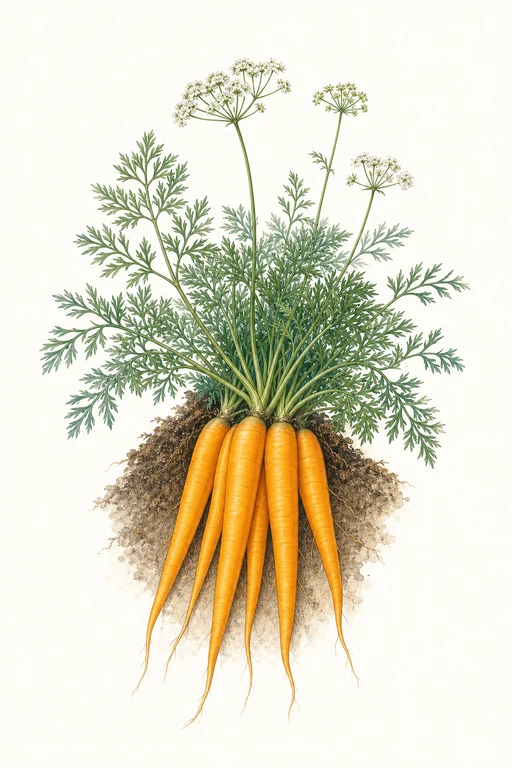
Yellowstone
75d to harvest
Sweet, sun-warmed flavor leads the way with Yellowstone, a Nantes carrot that ripens to a vivid, golden-orange core and a tender, crisp bite. The roots are delightfully uniform and slender-cylindrical, with a smooth skin and a fine-grained texture that stays pleasantly snappy from harvest through storage. Ideal for fresh salads, roasting trays, and brightening sauces with its naturally mellow sweetness—grow Yellowstone for a harvest that looks as radiant as it tastes.
Crop Dates
| Milestone | Date |
|---|---|
| Start Indoors | Direct Sow |
| Last Frost | May 13th |
| Transplant / Sow Outdoors | May 13th |
| Harvest Begins | Jul 27th |
| Harvest Ends | Sep 27th |
Crop Details
| Trait | Value |
|---|---|
| Days to Maturity | 75 |
| Sun Requirements | Full Sun |
| Growth Habit | Taproot |
| Support Needed | None |
| Planting Depth | Normal |
| Germination Temp (°F) | 60 |
| Min Soil Temp (°F) | 45 |
| Min Night Temp (°F) | 35 |
| Harden Off (days) | Not Required |
Recommended Companions
Frequently Asked Questions
What pest or disease issue most commonly affects carrots (Daucus carota var. sativus), and how can I control it?
Carrot rust fly larvae tunnel into roots, often showing as holes and corky damage near the crown. Cover beds with fine insect mesh as soon as seedlings emerge, keep weeds down, and rotate crops so carrots aren’t grown in the same spot the next season. If you see ongoing damage, remove the worst roots promptly to reduce breeding habitat.
How often should I water carrots during the main growing phase, and what soil moisture level do they need?
During active root bulking (roughly weeks 4–10), keep the top 1–2 inches of soil consistently moist but not waterlogged. In home gardens this usually means watering deeply 1–2 times per week, then adjusting to weather so the soil never dries out completely—especially after germination. Avoid letting the soil swing between dry and soaked, because it can trigger cracking and misshapen roots.