SproutSmart
SproutSmart Intelligent Garden Sowing

January King

Cabbage

Planting Schedule

Add January King to your garden to build a schedule and get reminders.
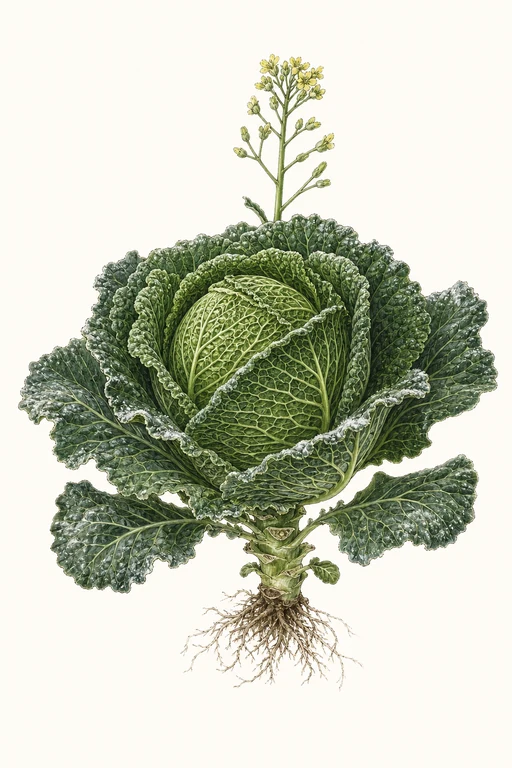
Botanical illustration of January King
80d to harvest

Bedecked in tightly layered, savoyed leaves, January King offers a cool-weather sweetness with a crisp, tender bite and a richly green, slightly buttery flavor. Its compact heads form slowly and steadily through winter, holding their quality for patient gardeners who love dependable harvests. Ideal for hearty braises, robust slaws, and warming winter sauces—this is savoy cabbage at its most elegant and garden-worthy.

Crop Dates

MilestoneDate
Start IndoorsMar 28th
Last FrostApr 25th
Transplant / Sow OutdoorsApr 18th
Harvest BeginsJul 7th
Harvest EndsOct 16th

Crop Details

TraitValue
Days to Maturity80
Sun RequirementsFull SunFull sun
Growth HabitRosette
Support NeededNone
Planting DepthNormal
Germination Temp (°F)45
Min Soil Temp (°F)40
Min Night Temp (°F)30
Harden Off (days)6

Frequently Asked Questions


How often should I water January King cabbage during the main growing phase?
During heading and leaf expansion, keep the root zone evenly moist—about 1 inch (2.5 cm) of water per week depending on rainfall and heat. Water deeply so moisture reaches the main roots, then let the top 1–2 inches (2.5–5 cm) of soil dry slightly before watering again. Inconsistent moisture can lead to loose heads or splitting.
How do I tell when January King cabbage is ready to harvest?
Harvest when heads feel firm (squeeze test: they should compress slightly but not feel hollow) and the outer leaves are a mature color for the variety. Let heads reach the typical ~80-day timeframe, but don’t wait until they start to crack or separate—cut heads promptly at the base with a sharp knife. If weather is hot, check firmness more frequently to avoid head splitting.
Botanical illustration of January King

Bedecked in tightly layered, savoyed leaves, January King offers a cool-weather sweetness with a crisp, tender bite and a richly green, slightly buttery flavor. Its compact heads form slowly and steadily through winter, holding their quality for patient gardeners who love dependable harvests. Ideal for hearty braises, robust slaws, and warming winter sauces—this is savoy cabbage at its most elegant and garden-worthy.