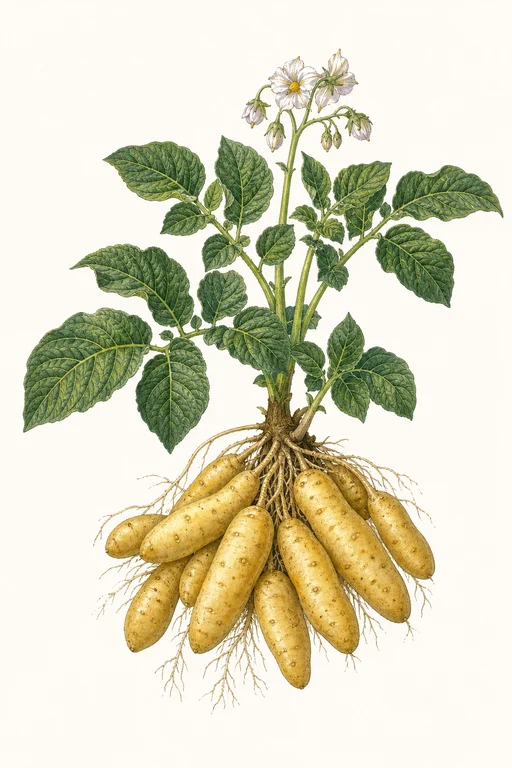
La Ratte
90d to harvest
A whisper of earth and a gentle, nutty sweetness rise from La Ratte’s slender fingerlings—golden skins that feel satin-smooth and flesh that turns buttery-tender with a fine, creamy bite. Each tuber is characterful and uniform in length, with a warm yellow cast and a lightly speckled, rustic charm that makes every harvest look like a small treasure. Ideal for showcasing in simple, high-flavor preparations—roasting to a bronzed finish, pan-searing for crisp edges, or boiling for velvety, spoonable texture in salads and elegant sauces.
Crop Dates
| Milestone | Date |
|---|---|
| Start Indoors | Direct Sow |
| Last Frost | Apr 25th |
| Transplant / Sow Outdoors | Apr 18th |
| Harvest Begins | Jul 17th |
| Harvest Ends | Oct 16th |
Crop Details
| Trait | Value |
|---|---|
| Days to Maturity | 90 |
| Sun Requirements | Full Sun |
| Growth Habit | Spreading |
| Support Needed | Hill |
| Planting Depth | Normal |
| Germination Temp (°F) | 55 |
| Min Soil Temp (°F) | 45 |
| Min Night Temp (°F) | 40 |
| Harden Off (days) | Not Required |
Recommended Companions
Frequently Asked Questions
How often should I water Solanum tuberosum during the main growing phase to support tuber formation?
During the main growth (roughly weeks 4–10 after planting, when plants are forming stems and starting to size tubers), keep soil consistently evenly moist but not waterlogged. In most home gardens this means watering deeply about 1–2 times per week, increasing frequency during warm, dry spells, with a target of roughly 1–2 inches (2.5–5 cm) of water per week. Stop heavy watering when foliage begins yellowing near maturity to reduce the risk of tuber rot.
How can I tell when La Ratte potatoes (Solanum tuberosum) are ready to harvest?
Harvest when plants reach about 90 days and the foliage naturally starts to yellow and die back; for best flavor, let the skin set for about 7–14 days after the leaves die. Check by gently digging at the edge of the row and look for tubers with firm skins that don’t rub off easily. Avoid waiting until the soil stays wet and cold, as this increases the chance of tuber disease.