SproutSmart
SproutSmart Intelligent Garden Sowing

Mammoth

Basil
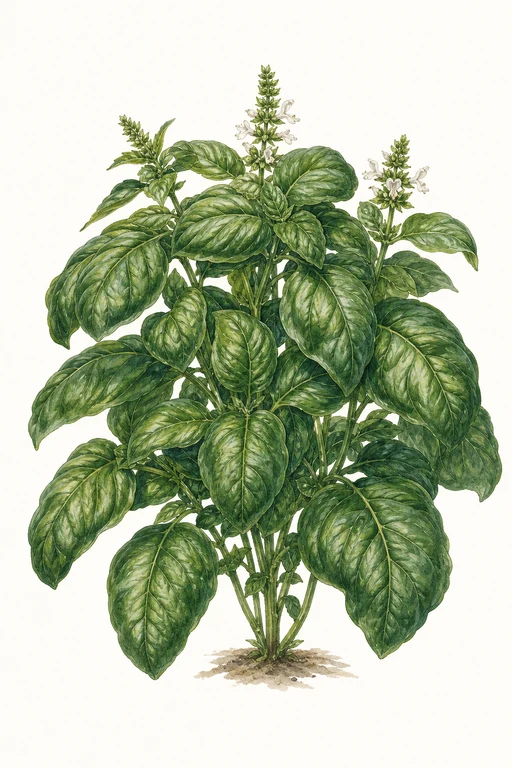
Botanical illustration of Mammoth
🌱 55d to harvest Upright

Aromas of sweet clove and fresh green tea rise the moment you brush the leaves—Mammoth Basil is a true showpiece with large, velv…

Planting Schedule

Add Mammoth to your garden to build a schedule and get reminders.

Crop Dates

MilestoneDate
Start IndoorsMar 28th
Last FrostApr 25th
Transplant / Sow OutdoorsJun 13th
Harvest BeginsAug 7th
Harvest EndsOct 16th

Crop Details

TraitValue
Days to Maturity55
Sun RequirementsFull SunFull sun
Growth HabitUpright
Support NeededNone
Planting DepthNormal
Germination Temp (°F)70
Min Soil Temp (°F)60
Min Night Temp (°F)50
Harden Off (days)10

Frequently Asked Questions


What’s the most common pest or disease issue for Ocimum basilicum (Mammoth basil), and how do I fix it?
Downy mildew is a frequent problem for basil in humid weather, showing as yellow patches on top leaves with gray/purple growth underneath. Remove infected leaves immediately, improve airflow between plants, and water at the soil line early in the day so foliage stays dry. If it keeps recurring, switch to a weekly preventive spray of a labeled biofungicide (based on your local product guidance) rather than watering more heavily.
How often should I water Mammoth basil during the main growing phase?
During active leaf growth, keep soil consistently moist but not soggy—water when the top 1 inch of soil feels dry. Typically this means about 1–2 times per week outdoors, but in hot spells you may need more frequent watering to prevent leaf droop. Avoid splashing leaves, because wet foliage promotes basil diseases.
How can I tell when Mammoth basil (Ocimum basilicum) is ready to harvest?
Start harvesting when plants are about 6–8 inches tall and have multiple mature leaf sets, roughly around 55 days for best production. Harvest by pinching or cutting above a pair of leaves to encourage branching, and take the top growth first. If the plant starts forming flower buds, harvest sooner and more often, because flowering quickly reduces leaf tenderness and flavor.
Botanical illustration of Mammoth

Aromas of sweet clove and fresh green tea rise the moment you brush the leaves—Mammoth Basil is a true showpiece with large, velvety foliage that feels substantial in the hand. Expect tender, broad leaves with a smooth, slightly crinkled surface and a lush, upright growth habit that makes harvests abundant and satisfying for fresh use and bold flavoring in sauces, pesto-style blends, and fragrant garnishes.

Sowing Tips

Transplant Conditions

Wait until soil reaches 60°F and nights stay above 50°F before moving outdoors. Harden off for 10 days first.

Expert Note

Grow Mammoth/lettuce-leaf basil in warm conditions and pinch lightly after transplant to encourage a fuller, larger leaf canopy.