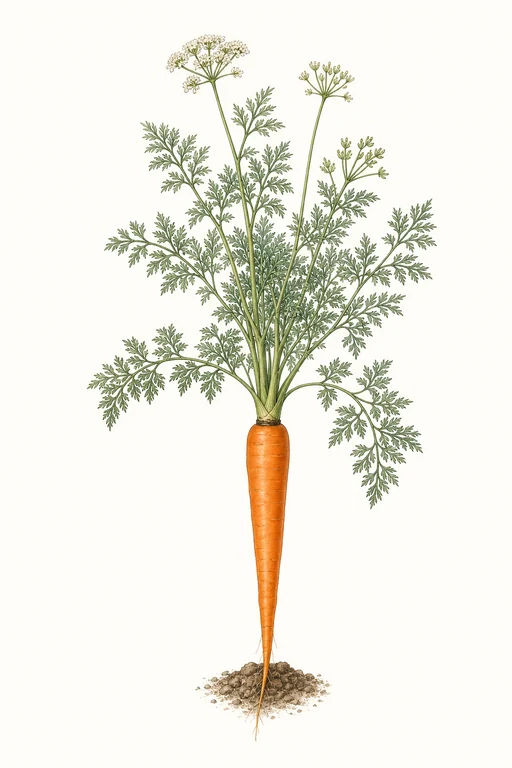
Nantes
Carrot
🌱 75d to harvest
Taproot
Sweet as fresh honey with a bright, carrot-top fragrance, Nantes delivers a smooth, tender bite and a pleasantly crisp snap from …
Crop Dates
| Milestone | Date |
|---|---|
| Start Indoors | Direct Sow |
| Last Frost | Apr 25th |
| Transplant / Sow Outdoors | Apr 25th |
| Harvest Begins | Jul 9th |
| Harvest Ends | Oct 16th |
Crop Details
| Trait | Value |
|---|---|
| Days to Maturity | 75 |
| Sun Requirements | Full Sun |
| Growth Habit | Taproot |
| Support Needed | None |
| Planting Depth | Normal |
| Germination Temp (°F) | 70 |
| Min Soil Temp (°F) | 40 |
| Min Night Temp (°F) | 28 |
| Harden Off (days) | Not Required |
Recommended Companions
Frequently Asked Questions
What pest or disease commonly affects Spinacia oleracea (Nantes spinach), and how can I prevent it?
Spinach (Spinacia oleracea) is especially prone to downy mildew, which shows up as pale yellow patches on leaves with a gray-violet growth underneath. Keep the canopy drier by watering at the soil line, spacing plants to improve airflow, and removing infected leaves right away. If you see a new spot spreading, stop overhead watering and restart with fresh, untreated seed once conditions cool, since mildew can build quickly in damp weather.
How often should I water Nantes spinach during its main growth phase (around the 3–6 weeks after germination)?
During active leaf growth, keep the top 1–2 inches of soil consistently moist but not waterlogged—typically about 1 inch of water per week, adjusted for heat and wind. Water deeply in the morning and aim for steady moisture because fluctuating dryness followed by heavy watering can stress plants and slow leaf expansion. If leaves start to look dull or wilt in mid-day, increase frequency slightly rather than giving a large soaking at longer intervals.
How do I know when to harvest Nantes spinach (Spinacia oleracea)?
Harvest when leaves are fully expanded and tender, usually about 40–60 days from sowing for baby leaves, and closer to ~75 days for larger heads/leaf clusters. Pick outer leaves first (snip at the base) when they’re about palm-sized, or harvest the whole plant if it reaches its full, vigorous rosette. Avoid waiting until the plant bolts—once flowering stems start, leaves turn tougher and more bitter.