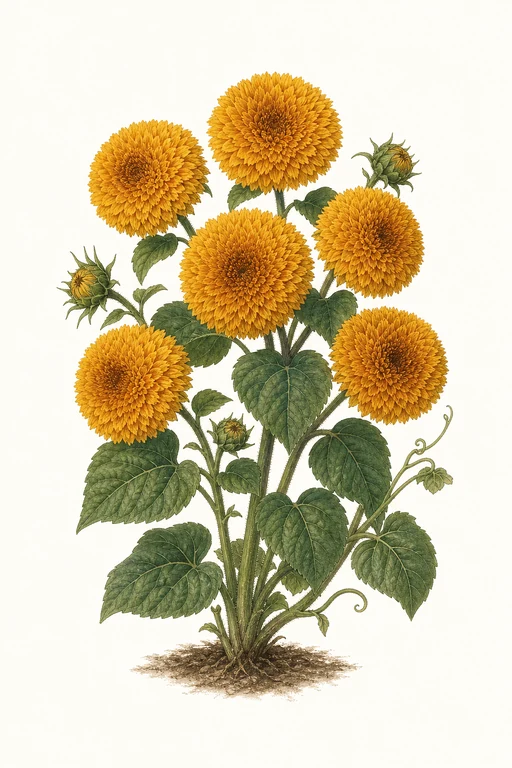
Teddy Bear
70d to harvest
Velvety, honeyed blooms arrive with a plush, teddy-bear softness—sunlit petals that seem to glow from within. Teddy Bear sunflower forms compact, well-branched plants that carry abundant, rounded flower heads with a rich, warm color and a satisfyingly dense, cushion-like texture. Ideal for beds and borders, it brings long-lasting visual impact to sunny spaces and makes a striking centerpiece in arrangements.
Crop Dates
| Milestone | Date |
|---|---|
| Start Indoors | Direct Sow |
| Last Frost | Apr 25th |
| Transplant / Sow Outdoors | Apr 25th |
| Harvest Begins | Jul 4th |
| Harvest Ends | Oct 16th |
Crop Details
| Trait | Value |
|---|---|
| Days to Maturity | 70 |
| Sun Requirements | Full Sun |
| Growth Habit | Upright |
| Support Needed | None |
| Planting Depth | Normal |
| Germination Temp (°F) | 70 |
| Min Soil Temp (°F) | 55 |
| Min Night Temp (°F) | 45 |
| Harden Off (days) | Not Required |
Recommended Companions
Frequently Asked Questions
What pest or disease most often affects Helianthus annuus (Teddy Bear sunflower), and how do I treat it?
Watch for powdery mildew and gray mold, especially when nights are humid and airflow is poor. Remove and destroy badly affected leaves, then space plants farther and water at the soil line to keep foliage dry; if mildew is recurring, apply a labeled fungicide formulated for powdery mildew on ornamentals. Also keep an eye out for aphids on fresh growth—spray plants with a strong stream of water and use insecticidal soap if colonies persist.
How often should I water Teddy Bear sunflowers during active growth?
During the main growth phase, water deeply when the top 1–2 inches of soil dry out, rather than daily light watering. Aim for consistently moist soil but not soggy conditions; Helianthus annuus performs poorly if roots stay wet, so ensure good drainage and avoid wetting the leaves. In hot weather, this usually means about 1 inch of water per week total (from rainfall and irrigation), adjusted for your soil type.