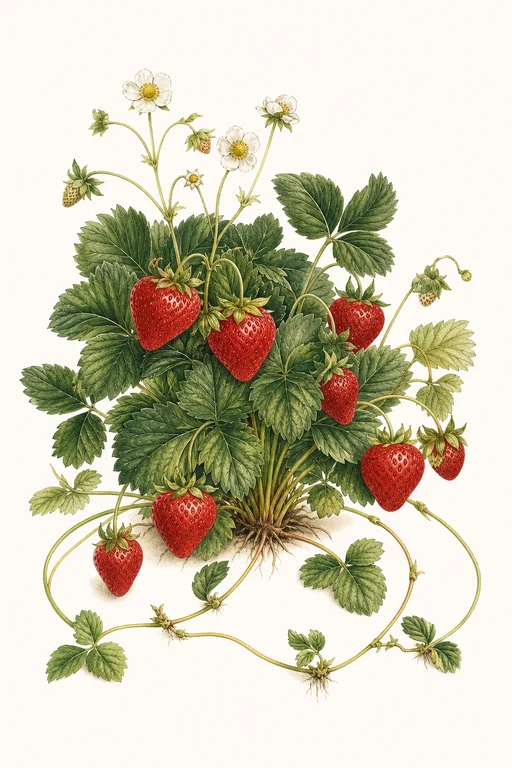
Camarosa
First comes the fragrance—sweet, sun-warmed strawberry perfume that rises the moment the berries blush. Camarosa delivers bright, glossy fruit with a firm, juicy bite and a classic, well-balanced flavor that shines whether you’re enjoying them straight from the garden or turning them into vibrant preserves and sauces.
Crop Dates
| Milestone | Date |
|---|---|
| Start Indoors | Direct Sow |
| Last Frost | Apr 20th |
| Transplant / Sow Outdoors | Apr 20th |
| Harvest Begins | Apr 20th |
| Harvest Ends | Oct 20th |
Crop Details
| Trait | Value |
|---|---|
| Days to Maturity | N/A |
| Sun Requirements | Full Sun |
| Growth Habit | Perennial_Crown |
| Support Needed | None |
| Planting Depth | Normal |
| Germination Temp (°F) | 70 |
| Min Soil Temp (°F) | 45 |
| Min Night Temp (°F) | 32 |
| Harden Off (days) | Not Required |
Recommended Companions
Frequently Asked Questions
What’s the most common strawberry (Fragaria × ananassa) disease in home gardens, and how do I manage it?
A very common problem is gray mold (Botrytis), which shows up as fuzzy gray growth on berries and soft rot during humid weather. Remove and discard affected berries immediately, improve airflow between plants, and avoid wetting foliage by watering at the soil line. If rain or humidity stays high, use a light straw mulch to keep berries off the soil and reduce splashing that spreads the fungus.
How often should I water Fragaria × ananassa during the main growing/fruiting phase?
During flowering and fruit development, keep the root zone evenly moist but not soggy—aim for about 1–1.5 inches of water per week depending on heat and rainfall. Water in the morning so leaves dry quickly, and check that the top few inches of soil aren’t drying out completely before watering again. If you see plants wilting midday yet soil feels wet or muddy, adjust frequency downward to prevent crown/root stress.