
Creeping Thyme
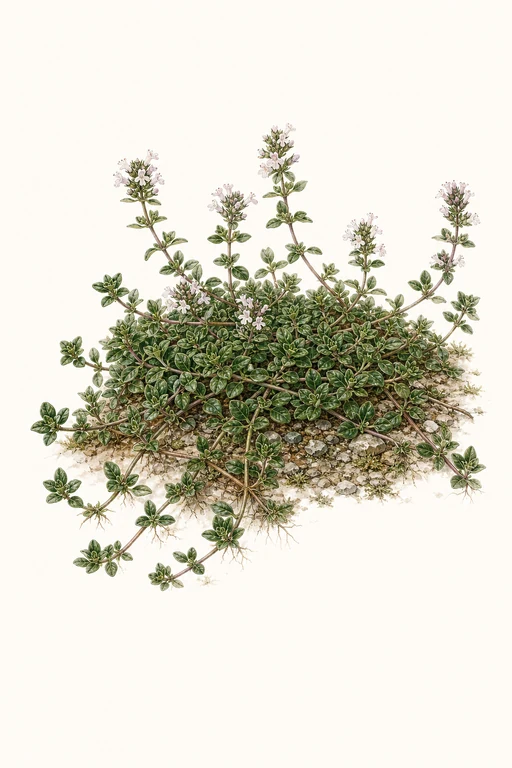
Creeping Thyme drapes the garden in a fragrant, velvety carpet—tiny leaves release a vivid herbal perfume at the slightest touch. In summer, it lifts with delicate, pale blooms that shimmer softly above the low, trailing mat, creating a living texture that feels lush underfoot. Ideal for edging, pathways, and sunny ground-cover displays, it’s a resilient choice for gardeners who want beauty and lasting fragrance in one enduring spread.
Crop Dates
| Milestone | Date |
|---|---|
| Last Frost | Apr 20th |
| Growing Approach | Protected Environment Only |
Crop Details
| Trait | Value |
|---|---|
| Days to Maturity | 730 |
| Sun Requirements | Full Sun |
| Growth Habit | Spreading |
| Support Needed | None |
| Planting Depth | Surface |
| Germination Temp (°F) | 65 |
| Min Soil Temp (°F) | 40 |
| Min Night Temp (°F) | 35 |
| Harden Off (days) | 7 |
Frequently Asked Questions
What pest or disease commonly affects Thymus serpyllum (creeping thyme), and how do I fix it?
How often should I water creeping thyme during active growth?
How can I tell when creeping thyme is ready to harvest?
Creeping Thyme drapes the garden in a fragrant, velvety carpet—tiny leaves release a vivid herbal perfume at the slightest touch. In summer, it lifts with delicate, pale blooms that shimmer softly above the low, trailing mat, creating a living texture that feels lush underfoot. Ideal for edging, pathways, and sunny ground-cover displays, it’s a resilient choice for gardeners who want beauty and lasting fragrance in one enduring spread.
Sowing Tips

Soil Temperature
Direct sow or transplant when soil at planting depth holds 40°F for reliable germination and early growth.
Expert Note

For best ground-cover establishment, start indoors lightly (or sow on the surface), then plant into warm, well-drained soil and keep seedlings evenly moist until they knit together.

