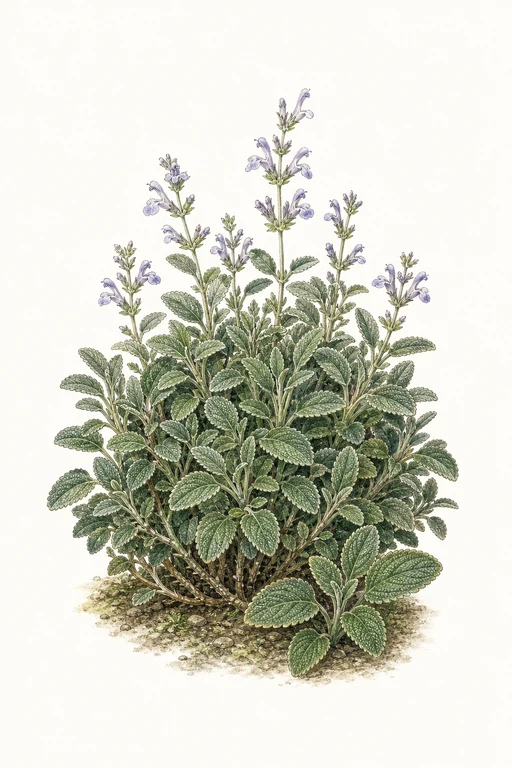
Dwarf Garden Sage
90d to harvest
Breathe in the silvery, velvety leaves of Dwarf Garden Sage—an aromatic cushion of cool, resinous fragrance with a softly peppery, savory bite. Compact and tidy at maturity, its small foliage delivers concentrated flavor and a tender, finely textured leaf that shines in fresh sprigs and dried bundles alike. Grow it for fragrant herb beds, edging, and pot culture, then harvest repeatedly for sauces, roasted accents, and pickling brines that call for classic sage character.
Crop Dates
| Milestone | Date |
|---|---|
| Start Indoors | Mar 9th |
| Last Frost | Apr 20th |
| Transplant / Sow Outdoors | Apr 20th |
| Harvest Begins | Jul 19th |
| Harvest Ends | Oct 20th |
Crop Details
| Trait | Value |
|---|---|
| Days to Maturity | 90 |
| Sun Requirements | Full Sun |
| Growth Habit | Bush |
| Support Needed | None |
| Planting Depth | Normal |
| Germination Temp (°F) | 70 |
| Min Soil Temp (°F) | 45 |
| Min Night Temp (°F) | 50 |
| Harden Off (days) | 7 |
Recommended Companions
Frequently Asked Questions
What pests or diseases commonly affect Salvia officinalis (dwarf garden sage), and how do I treat them at home?
Sage often develops powdery mildew and root rot in cool, humid conditions or when the soil stays wet. Improve airflow with wider spacing, water at the base, and let the top 1–2 in (2–5 cm) of soil dry between waterings; remove badly affected leaves and discard them. If mildew shows up, treat early with a label-approved horticultural fungicide and keep plants in full sun to dry foliage quickly.
How often should I water Salvia officinalis during its main growing phase, and what soil moisture level should I aim for?
During active growth, water deeply only when the top inch (2–3 cm) of soil is dry, aiming for evenly moist but not soggy soil. Once established, dwarf garden sage is drought-tolerant, so frequent light watering usually causes weak roots and more disease risk. In containers, check moisture more often—water until excess drains, then wait for that top inch to dry again.