
French Summer Thyme
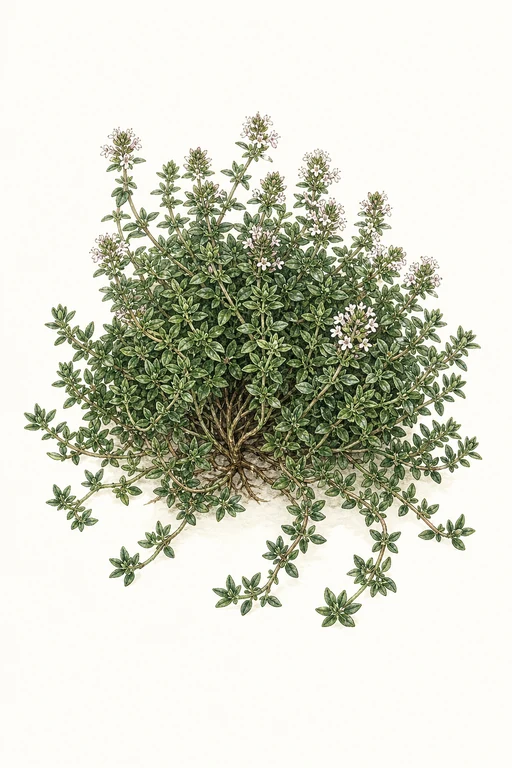
Aromatic as a sunlit garden path, French Summer Thyme fills the air with a bright, herbal perfume and a gently peppery, wood-kissed flavor. Its fine, narrow leaves hold a tender, springy texture that stays fragrant through the season, making it a favorite for everyday seasoning and finishing. Grow French Summer Thyme for fresh sprigs to lift sauces, soups, and roasted vegetables, or to dry and store for steady, savory character.
Sowing Tips

Transplant Conditions
Wait until soil reaches 45°F and nights stay above 35°F before moving outdoors. Harden off for 7 days first.
Expert Note

Start thyme lightly (barely covering seed), then harden off and plant into warm, well-drained soil for best flavor and long-term survival.
Crop Dates
| Milestone | Date |
|---|---|
| Start Indoors | Mar 30th |
| Last Frost | Apr 20th |
| Transplant / Sow Outdoors | Apr 20th |
| Harvest Begins | Jun 19th |
| Harvest Ends | Oct 20th |
Crop Details
| Trait | Value |
|---|---|
| Days to Maturity | 60 |
| Sun Requirements | Full Sun |
| Growth Habit | Upright |
| Support Needed | None |
| Planting Depth | Surface |
| Germination Temp (°F) | 70 |
| Min Soil Temp (°F) | 45 |
| Min Night Temp (°F) | 35 |
| Harden Off (days) | 7 |
Recommended Companions


Frequently Asked Questions
What’s the most common disease problem for Thymus vulgaris (French summer thyme), and how do I prevent it?
How often should I water French summer thyme during active growth?
How can I tell when French summer thyme is ready to harvest?
Sowing Tips
Transplant Conditions
Wait until soil reaches 45°F and nights stay above 35°F before moving outdoors. Harden off for 7 days first.
Expert Note
Start thyme lightly (barely covering seed), then harden off and plant into warm, well-drained soil for best flavor and long-term survival.
Aromatic as a sunlit garden path, French Summer Thyme fills the air with a bright, herbal perfume and a gently peppery, wood-kissed flavor. Its fine, narrow leaves hold a tender, springy texture that stays fragrant through the season, making it a favorite for everyday seasoning and finishing. Grow French Summer Thyme for fresh sprigs to lift sauces, soups, and roasted vegetables, or to dry and store for steady, savory character.