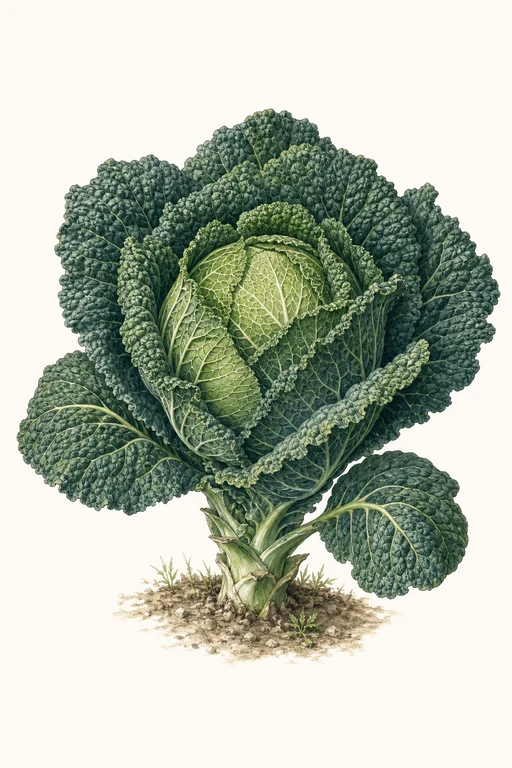
Winter King
85d to harvest
Feel the slow, steady sweetness of Winter King as its savoyed head tightens into a cool-weather jewel—deeply crinkled leaves that hold their color and a gentle, mellow flavor that shines after the first chill. Expect a tender, springy texture with richly veined folds, ideal for hearty winter fare and robust braises. Grow it for dependable, long-keeping performance and a stately head that looks as impressive as it tastes.
Crop Dates
| Milestone | Date |
|---|---|
| Start Indoors | Mar 23rd |
| Last Frost | Apr 20th |
| Transplant / Sow Outdoors | Apr 13th |
| Harvest Begins | Jul 7th |
| Harvest Ends | Oct 20th |
Crop Details
| Trait | Value |
|---|---|
| Days to Maturity | 85 |
| Sun Requirements | Full Sun |
| Growth Habit | Rosette |
| Support Needed | None |
| Planting Depth | Normal |
| Germination Temp (°F) | 45 |
| Min Soil Temp (°F) | 40 |
| Min Night Temp (°F) | 32 |
| Harden Off (days) | 6 |
Recommended Companions
Frequently Asked Questions
What pest or disease most commonly affects Brassica oleracea var. capitata (Winter King cabbage), and how can I control it?
Cabbage worms (including cabbage loopers and imported cabbageworms) are among the most common pests on Brassica oleracea var. capitata. Hand-pick larvae early and spray as needed with Bacillus thuringiensis (Bt) when caterpillars are small; repeat according to label instructions. For disease, watch for black rot and other brassica rots by removing infected leaves immediately and avoiding overhead watering so foliage stays dry.
How often should I water Winter King cabbage during the main growing phase?
During head formation, keep the soil evenly moist—aim for about 1–1.5 inches of water per week, adjusting for heat and rainfall. Water deeply so moisture reaches 6–8 inches down, and avoid letting the soil swing from dry to waterlogged because cabbages can develop poor head texture and split. Mulch helps stabilize moisture around the plants.
How do I tell when Winter King cabbage is ready to harvest?
Harvest when heads are firm and compact with leaves that feel tight rather than loose, typically around 85 days from planting. Use the head size and firmness—if you press the outside lightly and it feels springy or loose, it needs more time. For best quality, cut in the cool part of the day and leave a short stem with outer leaves to protect the head.