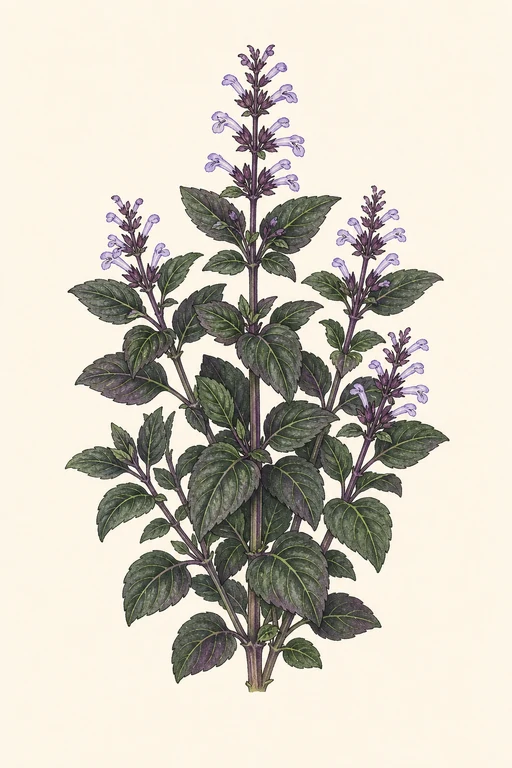
African Blue
70d to harvest
Experience the aromatic embrace of African Blue Basil, a stunning herb that captivates with its vibrant purple-tinged leaves and a robust, sweet flavor profile. Perfect for fresh salads or as a fragrant garnish, this variety also boasts a unique floral aroma that enhances any dish. Its lush foliage adds not only culinary delight but also ornamental beauty to your garden.
Crop Dates
| Milestone | Date |
|---|---|
| Start Indoors | Jan 23rd |
| Last Frost | Mar 6th |
| Transplant / Sow Outdoors | May 1st |
| Harvest Begins | Jul 10th |
| Harvest Ends | Nov 26th |
Crop Details
| Trait | Value |
|---|---|
| Days to Maturity | 70 |
| Sun Requirements | Full Sun |
| Growth Habit | Upright |
| Support Needed | Upright |
| Planting Depth | Normal |
| Germination Temp (°F) | 70 |
| Min Soil Temp (°F) | 60 |
| Min Night Temp (°F) | 50 |
| Harden Off (days) | 10 |
Recommended Companions
Frequently Asked Questions
How do I manage powdery mildew on African Blue plants?
Powdery mildew often shows as a white, dusty coating on African Blue leaves, especially when nights are cool and humidity stays high. Improve airflow by spacing plants as labeled and watering the soil (not the leaves); remove the most heavily affected leaves early. If it’s spreading, spray a labeled sulfur or potassium bicarbonate product, repeating as directed until the coating stops spreading (avoid sulfur on very hot days).
How often should I water African Blue during active growth (around weeks 3–8)?
During the main growth period, keep the soil evenly moist but not soggy—aim for the top 1 inch to dry slightly between waterings. In warm weather this usually means watering about 1–2 times per week, but increase frequency if the top inch dries in a day. Use deep watering so moisture reaches the root zone; African Blue in constantly wet soil is much more prone to stem and root problems.