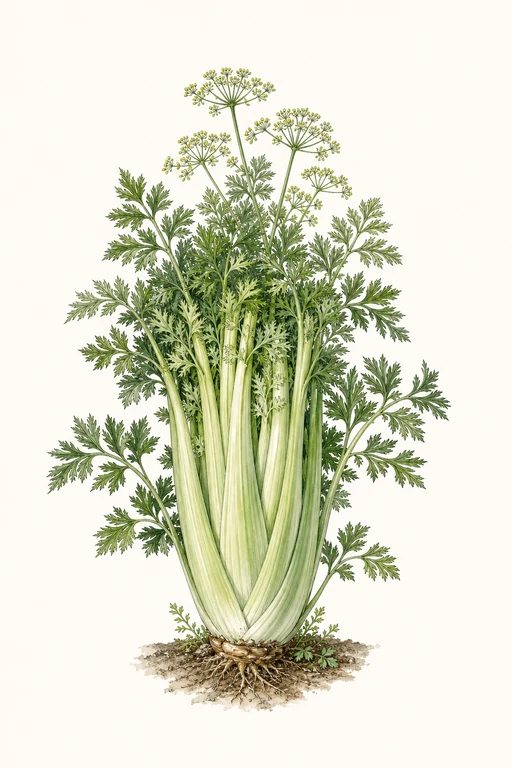
Amsterdam
Celery
🌱 85d to harvest
Rosette
Crisp, cool stalks with a clean, bright celery snap—Amsterdam delivers a refined crunch that feels as fresh as a morning breeze. …
Crop Dates
| Milestone | Date |
|---|---|
| Start Indoors | Dec 26th |
| Last Frost | Mar 6th |
| Transplant / Sow Outdoors | Feb 27th |
| Harvest Begins | May 23rd |
| Harvest Ends | Nov 26th |
Crop Details
| Trait | Value |
|---|---|
| Days to Maturity | 85 |
| Sun Requirements | Part Sun |
| Growth Habit | Rosette |
| Support Needed | None |
| Planting Depth | Normal |
| Germination Temp (°F) | 70 |
| Min Soil Temp (°F) | 45 |
| Min Night Temp (°F) | 35 |
| Harden Off (days) | 6 |
Recommended Companions
Frequently Asked Questions
Why are my Amsterdam greens developing gray, fuzzy patches or damp-looking spots, and how do I stop it?
Gray mold (Botrytis) on Amsterdam plants is usually triggered by cool, humid weather and crowded growth that keeps leaves wet. Remove and discard infected leaves immediately, then thin plants so air moves through the canopy and water only at the soil line (not over the leaves). If it keeps spreading, use a label-approved fungicide for vegetables and apply according to the product directions, especially before more cloudy/humid spells.
How often should I water Amsterdam during the main growing phase, and what soil moisture level should I aim for?
During the main growth period (roughly weeks 3–8 after sprouting), keep the top 1 inch of soil consistently moist but not soggy. Water about 1–2 times per week depending on heat and container vs. ground conditions, adding more only if the soil dries faster than the 1-inch depth test. Aim for steady moisture because fluctuations can lead to weak, stunted growth in Amsterdam, especially under part-sun conditions where soil can dry unevenly.
How can I tell when Amsterdam is ready to harvest at about 85 days?
Amsterdam is ready to harvest when heads or leaf clusters are fully formed for the variety and feel firm to the touch, not loose or watery. Harvest in the morning when plants are turgid; if you squeeze a mature outer piece and it springs back, it’s a good sign you’re at the right stage. For best eating quality, harvest before leaves begin to yellow heavily or look over-mature at the crown.