
Sweet Basil
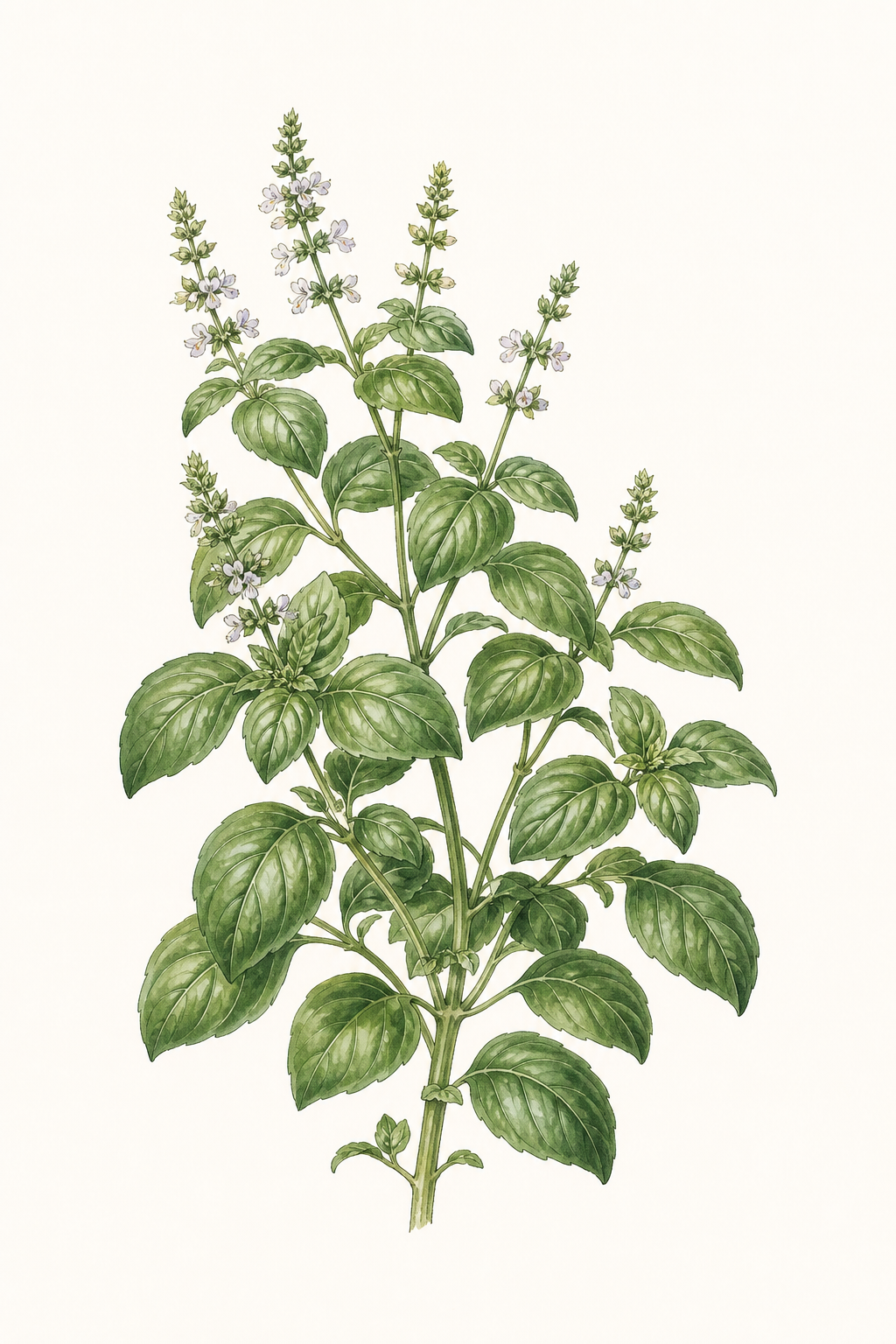
Sweet Basil fills the garden with a bright, sweet-anise fragrance and delivers tender leaves that feel velvety-soft to the touch.…
Crop Dates
| Milestone | Date |
|---|---|
| Start Indoors | Feb 6th |
| Last Frost | Mar 6th |
| Transplant / Sow Outdoors | Apr 24th |
| Harvest Begins | Jun 23rd |
| Harvest Ends | Nov 26th |
Crop Details
| Trait | Value |
|---|---|
| Days to Maturity | 60 |
| Sun Requirements | Full Sun |
| Growth Habit | Upright |
| Support Needed | None |
| Planting Depth | Surface |
| Germination Temp (°F) | 75 |
| Min Soil Temp (°F) | 60 |
| Min Night Temp (°F) | 50 |
| Harden Off (days) | 10 |
Recommended Companions
Frequently Asked Questions
What pest or disease most often affects Ocimum basilicum (sweet basil), and how do I treat it?
How often should I water sweet basil during the main growing phase, and what soil moisture level should I maintain?
How can I tell when Ocimum basilicum is ready to harvest?
Sweet Basil fills the garden with a bright, sweet-anise fragrance and delivers tender leaves that feel velvety-soft to the touch. At maturity, its lush, medium-green foliage forms an upright, generous habit—ideal for harvesting repeatedly while the plants stay vigorous through warm weather. Grow Sweet Basil for its signature aromatic punch in classic Italian-style sauces, fresh leaf garnishes, and fragrant pesto-style blends.
Sowing Tips

Transplant Conditions
Wait until soil reaches 60°F and nights stay above 50°F before moving outdoors. Harden off for 10 days first.
Expert Note

Pinch the top sets of leaves early (first 1–2 sets) to encourage branching and a fuller plant.