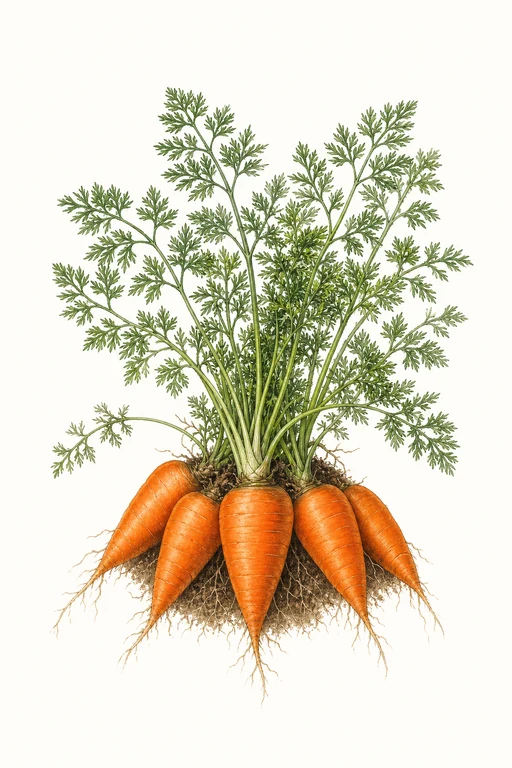
Carrot Delight
Carrot
🌱 70d to harvest
Taproot
Sweet, honeyed fragrance rises from the soil as Carrot Delight reaches maturity—its roots develop a rich, warm orange core with a…
Crop Dates
| Milestone | Date |
|---|---|
| Start Indoors | Direct Sow |
| Last Frost | Mar 6th |
| Transplant / Sow Outdoors | Mar 6th |
| Harvest Begins | May 15th |
| Harvest Ends | Nov 26th |
Crop Details
| Trait | Value |
|---|---|
| Days to Maturity | 70 |
| Sun Requirements | Full Sun |
| Growth Habit | Taproot |
| Support Needed | None |
| Planting Depth | Surface |
| Germination Temp (°F) | 75 |
| Min Soil Temp (°F) | 45 |
| Min Night Temp (°F) | 35 |
| Harden Off (days) | Not Required |
Recommended Companions
Frequently Asked Questions
What pest or disease is most likely on carrots (Daucus carota var. sativus), and what should I do if I see it?
Watch for carrot rust fly and its larval tunnels—signs include wilting tops and rough, scarred roots. Cover seedlings with fine insect netting soon after emergence to block egg-laying, and remove any heavily damaged plants to reduce the population. Keep the soil evenly moist (not waterlogged) because stressed plants are more susceptible.
How often should I water carrots during the main growing phase (70 days to maturity)?
After seedlings establish, keep the top 1–2 inches of soil consistently moist to support steady root bulking—typically about 1 inch of water per week, adjusted for heat and container size. Water deeply when the surface starts to dry, then avoid letting it swing between very dry and soaked, which can cause forking or splitting. Mulch lightly to reduce moisture fluctuations around the row.
How can I tell when my carrots (Daucus carota var. sativus) are ready to harvest?
Harvest when the roots have filled out to your expected size and the shoulder is visible just above the soil line (often around day 70, though smaller roots are fine if you prefer them tender). Gently loosen the soil beside a few plants to check diameter; mature carrots should feel firm and well-shaped rather than slender and flexible. If tops are starting to yellow, pull soon so they don’t over-mature in the ground.