
Giant Belgium
Tomato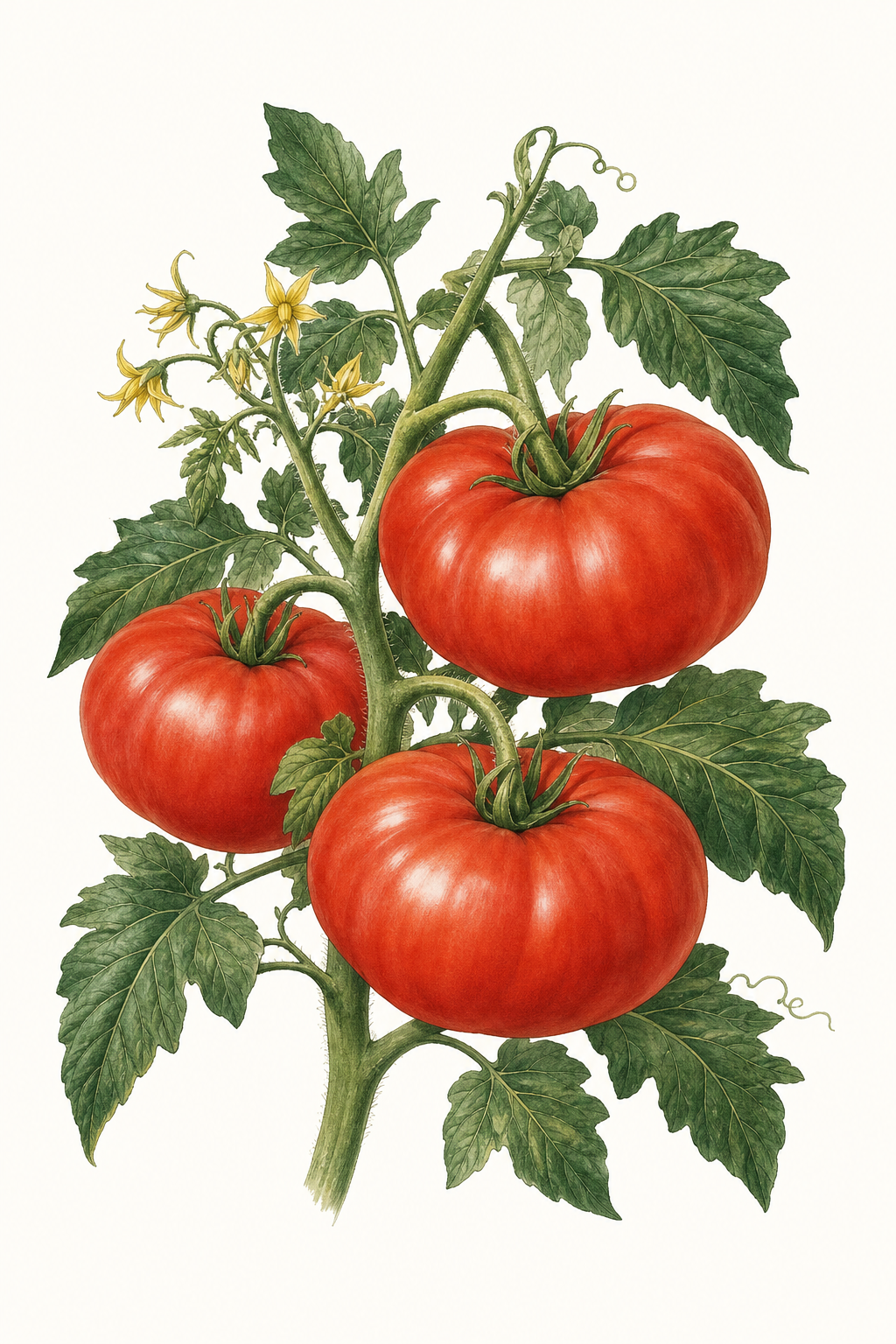
Sink your senses into Giant Belgium’s broad, beefsteak heft—flesh that tastes richly sweet with a gentle tang, as juicy as it is …
Crop Dates
| Milestone | Date |
|---|---|
| Start Indoors | Jan 16th |
| Last Frost | Mar 6th |
| Transplant / Sow Outdoors | May 1st |
| Harvest Begins | Jul 30th |
| Harvest Ends | Nov 26th |
Crop Details
| Trait | Value |
|---|---|
| Days to Maturity | 90 |
| Sun Requirements | Full Sun |
| Growth Habit | Indeterminate |
| Support Needed | Stake |
| Planting Depth | Deep |
| Germination Temp (°F) | 75 |
| Min Soil Temp (°F) | 60 |
| Min Night Temp (°F) | 50 |
| Harden Off (days) | 10 |
Recommended Companions
Frequently Asked Questions
What pest or disease is most common on Solanum lycopersicum (giant tomatoes), and how do I stop it?
How often should I water giant tomatoes (Solanum lycopersicum) during peak growth to prevent problems?
How can I tell when giant Belgium tomatoes are ready to harvest (Solanum lycopersicum)?
Sink your senses into Giant Belgium’s broad, beefsteak heft—flesh that tastes richly sweet with a gentle tang, as juicy as it is satisfying. At maturity, the fruits develop a warm, classic tomato glow with a smooth, satin skin and a dense, velvety interior that holds its shape beautifully. Grow it for standout slices and showy centerpiece harvests—ideal for bold, flavor-forward salads, vibrant sauces, and bright pickling-style preserves.
Sowing Tips

Transplant Conditions
Wait until soil reaches 60°F and nights stay above 50°F before moving outdoors. Harden off for 10 days first.
Expert Note

Start with sturdy seedlings (thick stems) and transplant only when daytime soil is ~60°F+ to avoid cold-stunt on large beefsteaks.