SproutSmart
SproutSmart Intelligent Garden Sowing

Greek Thyme

Thyme
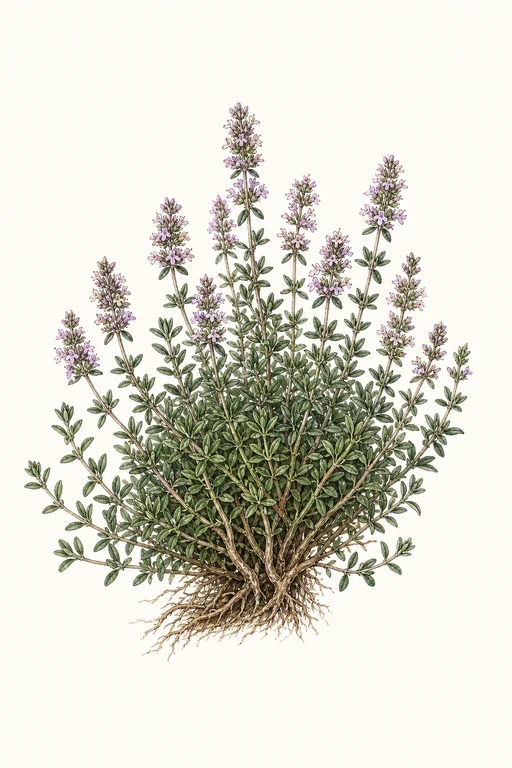
Botanical illustration of Greek Thyme
🌱 60d to harvest Upright

Aromatic as a sunlit hillside, Greek Thyme fills the garden with a bright, herbal perfume—cool, resinous, and distinctly lively. …

Planting Schedule

Add Greek Thyme to your garden to build a schedule and get reminders.

Crop Dates

MilestoneDate
Start IndoorsFeb 6th
Last FrostMar 6th
Transplant / Sow OutdoorsMay 1st
Harvest BeginsJun 30th
Harvest EndsNov 26th

Crop Details

TraitValue
Days to Maturity60
Sun RequirementsFull SunFull sun
Growth HabitUpright
Support NeededNone
Planting DepthSurface
Germination Temp (°F)70
Min Soil Temp (°F)55
Min Night Temp (°F)40
Harden Off (days)7

Frequently Asked Questions


What pest or disease commonly affects Thymus vulgaris (Greek thyme), and how can I manage it?
Greek thyme is prone to fungal issues like root rot and leaf spotting when the soil stays consistently wet. Water only when the top 1–2 cm of soil feels dry, ensure plants are in well-draining soil, and remove any spotted or yellowing foliage promptly. If you see persistent wilting despite dry soil, unpot and check roots for dark, mushy tissue, then replant in fresh, drier medium.
How often should I water Greek thyme during its main growing phase?
During the active growth period, water deeply but infrequently—typically about once every 7–14 days depending on heat and soil type. Let the top 1–2 cm of soil dry out between waterings, because Thymus vulgaris prefers dry to moderately moist conditions. In full sun, container plants often need more frequent checks than in-ground plants, but the same “dry top first” rule applies.
How do I know when Greek thyme is ready to harvest?
Harvest once plants are established and reach about 15–20 cm tall, which is usually around 60 days from sowing for many home setups. For best flavor, snip just above leaf nodes before flowering; small buds beginning to form is the ideal timing. Take only up to one-third of the plant at a time, and you’ll typically get a second flush of growth after cutting.
Botanical illustration of Greek Thyme

Aromatic as a sunlit hillside, Greek Thyme fills the garden with a bright, herbal perfume—cool, resinous, and distinctly lively. Leaves are small and velvety, forming a tidy, low mound that’s rich in flavor and ideal for drying or for building bold, fragrant profiles in everyday herb blends. Grow Greek Thyme for its dependable, fast-to-establish habit and its intensely fragrant foliage that rewards every brushing of the plant.

Sowing Tips

Transplant Conditions

Wait until soil reaches 55°F and nights stay above 40°F before moving outdoors. Harden off for 7 days first.

Expert Note

Sow lightly (barely cover), keep evenly moist until germination, then water sparingly after establishment for the best thyme flavor.