
Ibis
Celeriac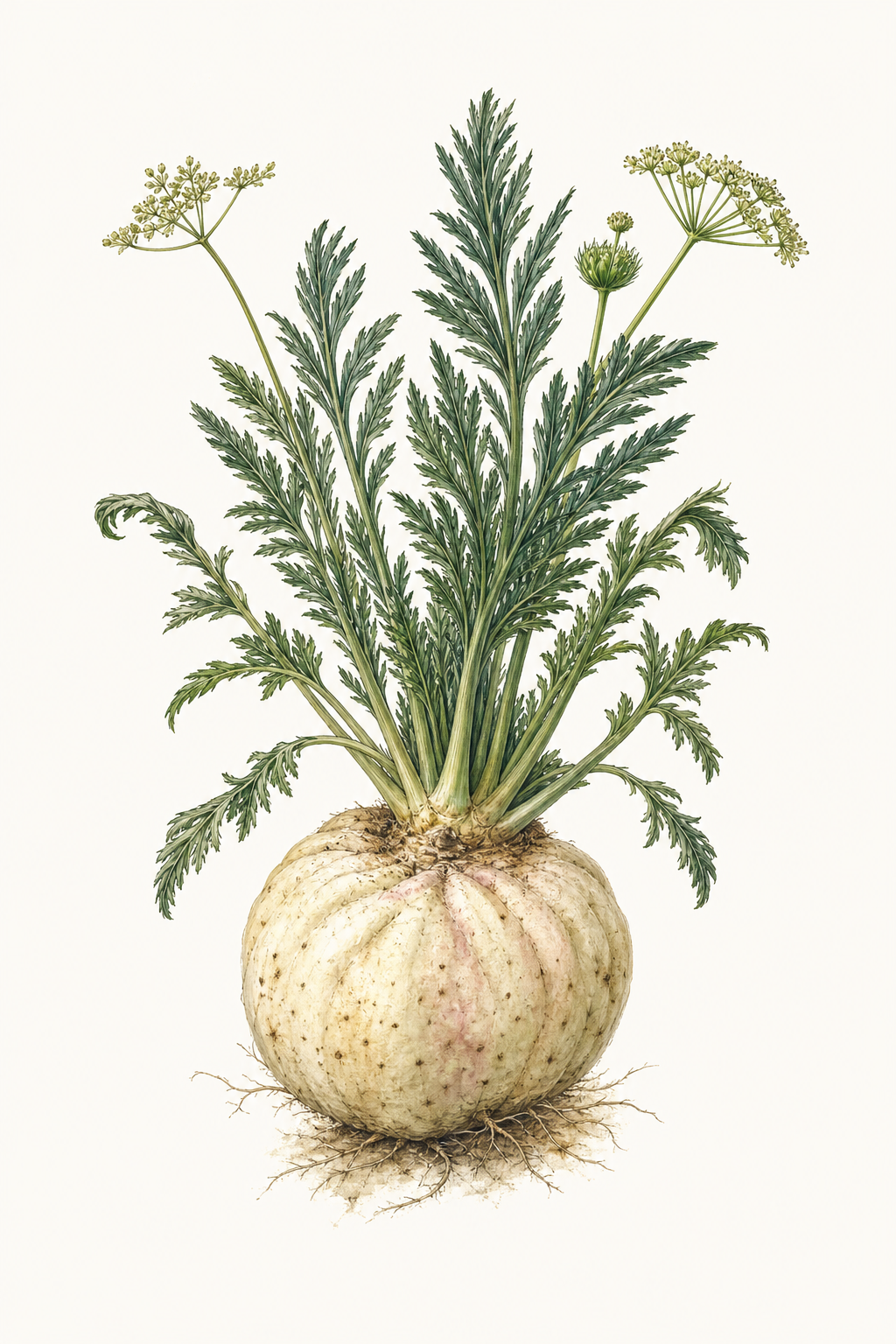
Aromatically bold from the first harvest onward, Ibis celeriac forms a dense, turnip-like crown with a smooth, creamy skin and a …
Crop Dates
| Milestone | Date |
|---|---|
| Start Indoors | Dec 26th |
| Last Frost | Mar 6th |
| Transplant / Sow Outdoors | Feb 20th |
| Harvest Begins | Jun 20th |
| Harvest Ends | Nov 26th |
Crop Details
| Trait | Value |
|---|---|
| Days to Maturity | 120 |
| Sun Requirements | Full Sun |
| Growth Habit | Bulbing |
| Support Needed | None |
| Planting Depth | Normal |
| Germination Temp (°F) | 70 |
| Min Soil Temp (°F) | 40 |
| Min Night Temp (°F) | 28 |
| Harden Off (days) | 6 |
Recommended Companions
Frequently Asked Questions
What pest or disease problem is most common on celeriac (Apium graveolens var. rapaceum), and what should I do?
How often should I water celeriac during the main growing phase?
How can I tell when my celeriac is ready to harvest?
Aromatically bold from the first harvest onward, Ibis celeriac forms a dense, turnip-like crown with a smooth, creamy skin and a clean, nutty depth that feels both bright and deeply savory. The flesh stays firm and fine-grained, ideal for achieving a silky texture in preparation—its flavor shines whether roasted to caramel warmth, simmered into comforting purées, or grated for crisp, refreshing contrast. Grow Ibis for a dependable 120-day rhythm and a handsome, harvest-ready root that stores well and keeps its character.
Sowing Tips

Transplant Conditions
Wait until soil reaches 40°F and nights stay above 28°F before moving outdoors. Harden off for 6 days first.
Expert Note

Start celeriac indoors early and transplant into consistently cool, fertile soil while keeping the crown at or slightly above the soil line for the best bulb development.