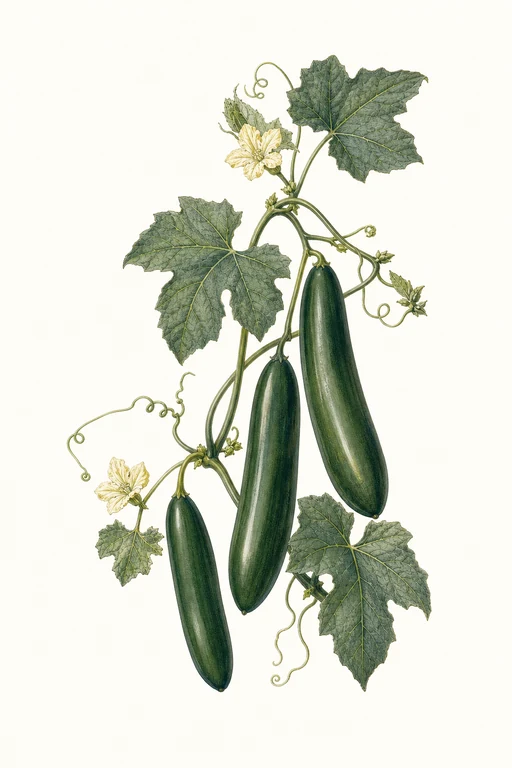
Kalunga
Cucumber
🌱 60d to harvest
Vine
Kalunga cucumber bursts with a crisp, cool snap and a clean, subtly sweet flavor that feels bright from the first bite. The Beit …
Crop Dates
| Milestone | Date |
|---|---|
| Start Indoors | Feb 27th |
| Last Frost | Mar 6th |
| Transplant / Sow Outdoors | Mar 13th |
| Harvest Begins | May 12th |
| Harvest Ends | Nov 26th |
Crop Details
| Trait | Value |
|---|---|
| Days to Maturity | 60 |
| Sun Requirements | Full Sun |
| Growth Habit | Vine |
| Support Needed | Trellis |
| Planting Depth | Normal |
| Germination Temp (°F) | 70 |
| Min Soil Temp (°F) | 65 |
| Min Night Temp (°F) | 55 |
| Harden Off (days) | 10 |
Recommended Companions
Frequently Asked Questions
What pest or disease is most common on Cucumis sativus (cucumber), and how do I control it at home?
Cucumber beetles and powdery mildew are two of the most common problems. Hand-pick beetles early, then protect young plants with insect netting or row cover until flowering; if needed, spot-treat with a labeled product for cucurbit beetles. For powdery mildew, keep leaves dry (water at the base) and remove heavily affected leaves early; you can also use a sulfur-based fungicide that’s labeled for cucumbers if mildew appears.
How often should I water Cucumis sativus during the main growing phase (after flowering)?
Water deeply about 1–2 times per week to keep the root zone evenly moist, but not soggy, especially from flowering through the first harvest. Aim for roughly 1 inch (2.5 cm) of water per week total, increasing slightly in hot, windy weather and reducing if the soil stays wet. Consistent moisture helps prevent bitter fruit and misshapen cucumbers.
How can I tell when Cucumis sativus is ready to harvest?
Harvest at about 60 days from sowing and begin picking when fruits are firm and reach the expected size for your cucumber—typically about 6–8 inches (15–20 cm) for many fresh-market types. Don’t wait for color to dull; pick when the skin is still glossy and the seeds aren’t hard. If you see fruits becoming oversized or turning dull/yellow, they’re past peak and will reduce new production.