
Kentucky Blue
Pole Bean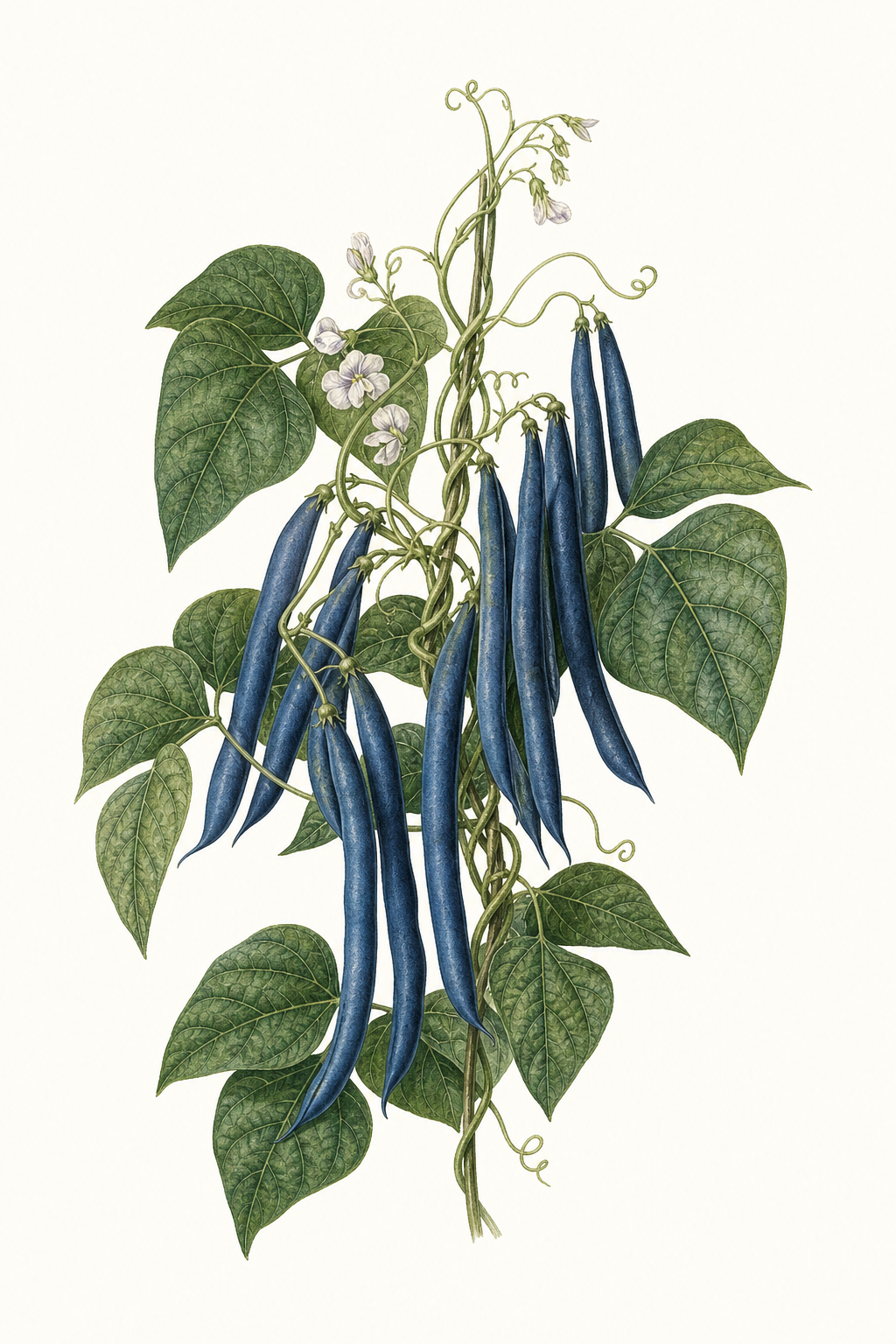
Sink your fork into Kentucky Blue’s tender, richly colored pods—an alluring deep blue-green that glows in the garden and stays cr…
Crop Dates
| Milestone | Date |
|---|---|
| Start Indoors | Direct Sow |
| Last Frost | Mar 6th |
| Transplant / Sow Outdoors | Mar 6th |
| Harvest Begins | Apr 30th |
| Harvest Ends | Nov 26th |
Crop Details
| Trait | Value |
|---|---|
| Days to Maturity | 55 |
| Sun Requirements | Full Sun |
| Growth Habit | Clumping |
| Support Needed | Trellis |
| Planting Depth | Normal |
| Germination Temp (°F) | 70 |
| Min Soil Temp (°F) | 60 |
| Min Night Temp (°F) | 50 |
| Harden Off (days) | Not Required |
Recommended Companions
Frequently Asked Questions
What pest or disease commonly affects Phaseolus vulgaris (Kentucky Blue bean), and how can I control it?
How often should I water Kentucky Blue (Phaseolus vulgaris) during the main growing phase (from flowering through pod fill)?
How do I know when Kentucky Blue (Phaseolus vulgaris) is ready to harvest?
Sink your fork into Kentucky Blue’s tender, richly colored pods—an alluring deep blue-green that glows in the garden and stays crisp with a clean, sweet snap. The straight, slender pods hold their texture beautifully, making them a standout for fresh snacking and quick roasting, as well as for vibrant pickling that showcases their distinctive hue. Grow a steady harvest on a vigorous pole for a long season of garden-to-table flavor.
Sowing Tips

Transplant Conditions
Wait until soil reaches 60°F and nights stay above 50°F before moving outdoors.
Expert Note

Direct sow Kentucky Blue beans after frost once soil is warm, keeping seed beds evenly moist until emergence for the best uniform stand.