
Mother Of Thyme
Thyme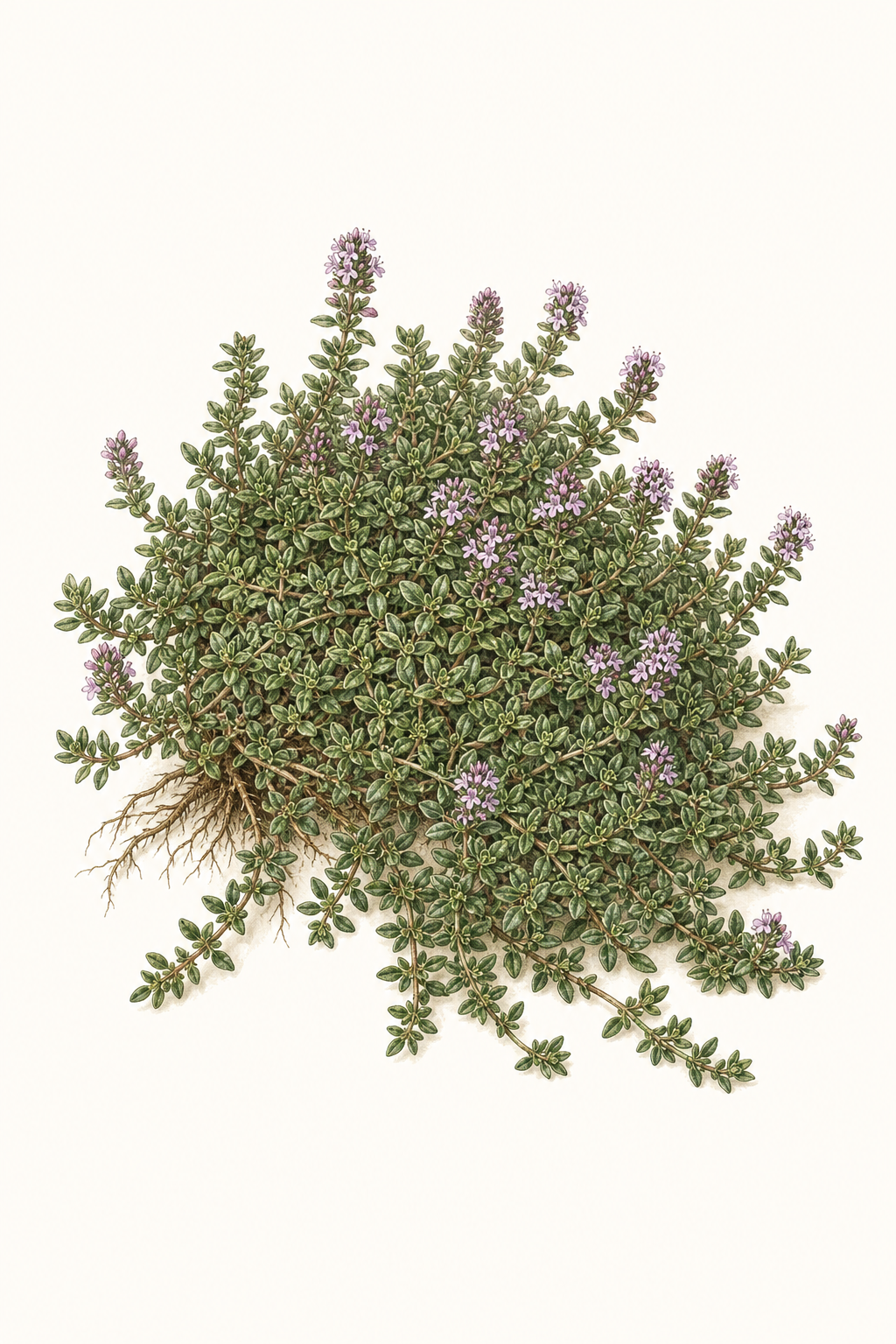
Breathe in the vivid, herbal perfume of ‘Mother Of Thyme’—a low, creeping mat that releases a warm, savory fragrance with every t…
Crop Dates
| Milestone | Date |
|---|---|
| Start Indoors | Feb 6th |
| Last Frost | Mar 6th |
| Transplant / Sow Outdoors | Mar 6th |
| Harvest Begins | May 15th |
| Harvest Ends | Nov 26th |
Crop Details
| Trait | Value |
|---|---|
| Days to Maturity | 70 |
| Sun Requirements | Full Sun |
| Growth Habit | Spreading |
| Support Needed | None |
| Planting Depth | Surface |
| Germination Temp (°F) | 65 |
| Min Soil Temp (°F) | 50 |
| Min Night Temp (°F) | 40 |
| Harden Off (days) | 7 |
Recommended Companions
Frequently Asked Questions
What pest or disease most commonly affects Thymus serpyllum (mother of thyme) and how can I treat it?
How often should I water Thymus serpyllum during the main growing phase?
How do I know when Thymus serpyllum is ready to harvest (around 70 days)?
Breathe in the vivid, herbal perfume of ‘Mother Of Thyme’—a low, creeping mat that releases a warm, savory fragrance with every touch. Its tiny leaves are densely set and richly textured, forming a tidy, trailing cushion that’s as beautiful as it is aromatic, with flavor that shines in dried bundles and fresh sprigs alike. Ideal for edging and ground-cover planting, it’s a perennial you’ll return to season after season for its steady, fragrant presence and dependable harvest over time.
Sowing Tips

Transplant Conditions
Wait until soil reaches 50°F and nights stay above 40°F before moving outdoors. Harden off for 7 days first.
Expert Note

For best establishment, start indoors for quicker coverage but prioritize full sun and very well-drained soil to prevent damping off.