SproutSmart
SproutSmart Intelligent Garden Sowing

Parsnip

Planting Schedule

Add Parsnip to your garden to build a schedule and get reminders.
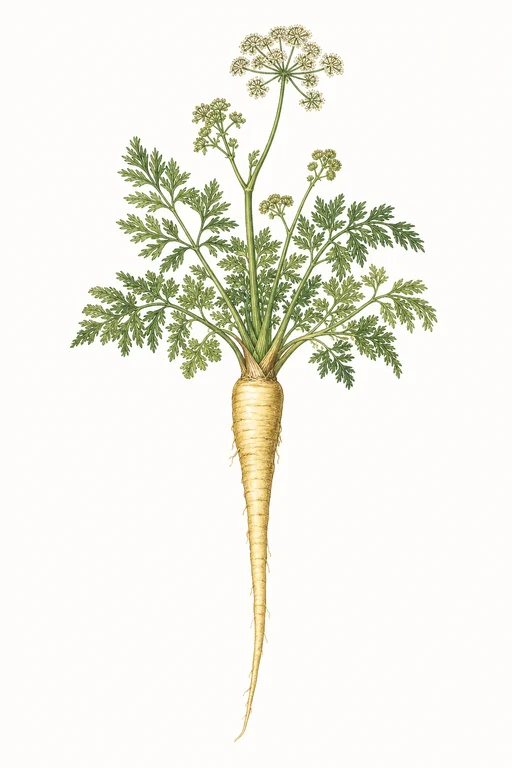
Botanical illustration of Parsnip
105d to harvest

Sweetly fragrant and richly mellow, this long-root Parsnip delivers a warm, honeyed flavor with a firm, creamy bite when grown to full maturity. The roots form smooth, tapered cylinders with a pale ivory skin that turns subtly golden in the sun, offering a velvety texture that holds beautifully through roasting and caramelizing. Ideal for long-season gardens, it shines in hearty root roasts, velvety purées, and savory soups, and it also lends itself to pickling for a bright, aromatic accent.

Crop Dates

MilestoneDate
Start IndoorsDirect Sow
Last FrostMar 6th
Transplant / Sow OutdoorsMar 6th
Harvest BeginsJun 19th
Harvest EndsNov 26th

Crop Details

TraitValue
Days to Maturity105
Sun RequirementsFull SunFull sun
Growth HabitTaproot
Support NeededNone
Planting DepthNormal
Germination Temp (°F)60
Min Soil Temp (°F)40
Min Night Temp (°F)28
Harden Off (days)Not Required

Frequently Asked Questions


How do I manage Cercospora leaf blight and other leaf spot problems on Pastinaca sativa (parsnip)?
Look for tan to brown spots that spread on parsnip leaves, often starting in the lower canopy in humid weather. Remove and discard infected foliage early, then improve airflow by thinning crowded plants and watering at the soil line instead of wetting leaves. If outbreaks are persistent, use a labeled fungicide for leafy vegetables/Apiaceae (follow the product label exactly) and avoid harvesting wet foliage to reduce spread.
What watering schedule and soil moisture level does Pastinaca sativa need during the main growing phase?
After seedlings establish, keep the soil consistently evenly moist but not waterlogged—aim for about 1 inch (2.5 cm) of water per week, split as needed during dry spells. Water deeply when the top 1 inch (2–3 cm) of soil dries, because parsnips form best when moisture is steady and roots aren’t repeatedly stressed. Mulch can help prevent swings, which otherwise lead to forked or fibrous roots.
When are parsnips (Pastinaca sativa) ready to harvest, and how can I tell?
Harvest at about 105 days from sowing, or when roots reach roughly 1–2 inches (2.5–5 cm) in diameter, though larger is fine if quality stays sweet. Use a gentle fork-lift to check size before pulling; if you feel a thick, well-formed root and the plant’s tops are starting to decline, it’s time. Parsnips also improve in flavor after cool weather, so you can harvest in stages after frost as long as the ground isn’t frozen solid.
Botanical illustration of Parsnip

Sweetly fragrant and richly mellow, this long-root Parsnip delivers a warm, honeyed flavor with a firm, creamy bite when grown to full maturity. The roots form smooth, tapered cylinders with a pale ivory skin that turns subtly golden in the sun, offering a velvety texture that holds beautifully through roasting and caramelizing. Ideal for long-season gardens, it shines in hearty root roasts, velvety purées, and savory soups, and it also lends itself to pickling for a bright, aromatic accent.