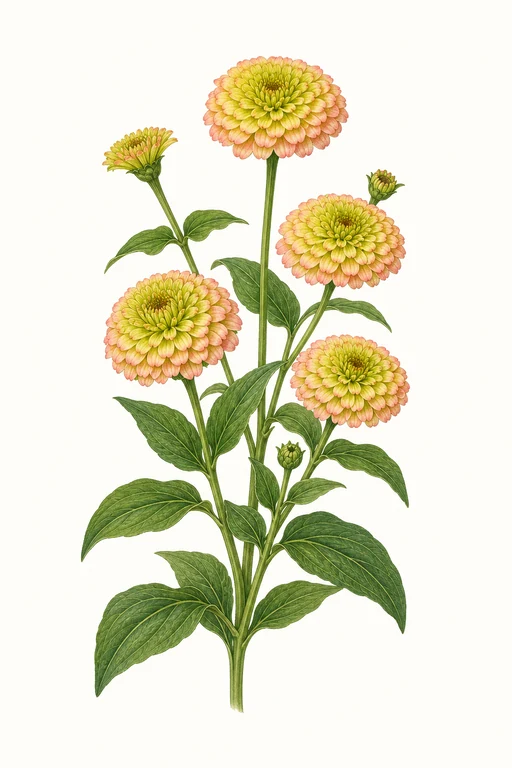
Queen Lime Blush
70d to harvest
Queen Lime Blush blooms with a luminous, lime-forward glow that blushes into soft apricot-pink at the petal edges—like a sunrise caught in full flower. The petals form dense, layered rosettes with a velvety look and a sturdy, upright habit that holds its shape beautifully in the garden. Grow it for abundant cut-flower color: perfect for bouquets and long-lasting displays, with blooms that stay vivid from first opening through peak summer.
Crop Dates
| Milestone | Date |
|---|---|
| Start Indoors | Feb 6th |
| Last Frost | Mar 6th |
| Transplant / Sow Outdoors | Mar 6th |
| Harvest Begins | May 15th |
| Harvest Ends | Nov 26th |
Crop Details
| Trait | Value |
|---|---|
| Days to Maturity | 70 |
| Sun Requirements | Full Sun |
| Growth Habit | Upright |
| Support Needed | None |
| Planting Depth | Normal |
| Germination Temp (°F) | 75 |
| Min Soil Temp (°F) | 70 |
| Min Night Temp (°F) | 55 |
| Harden Off (days) | 7 |
Recommended Companions
Frequently Asked Questions
What’s a common disease pest problem for Zinnia elegans (Queen Lime Blush), and how do I treat it?
Zinnia elegans is especially prone to powdery mildew, which shows up as a white, dusty coating on leaves and can start with lower leaves in humid weather. Water at the soil line (not overhead), improve airflow by spacing plants, and remove badly infected leaves early. If it keeps spreading, spray a labeled powdery mildew fungicide and repeat according to the label’s interval, targeting the undersides of leaves.
How often should I water Zinnia elegans during the main growing phase?
During active growth and flowering, keep the top 1 inch of soil evenly moist, but not soggy—water when it begins to dry out. Aim for about 1 inch of water per week total (more during heat waves), and always let excess water drain so roots don’t stay wet. Mulching lightly helps prevent moisture swings that can stress zinnias.