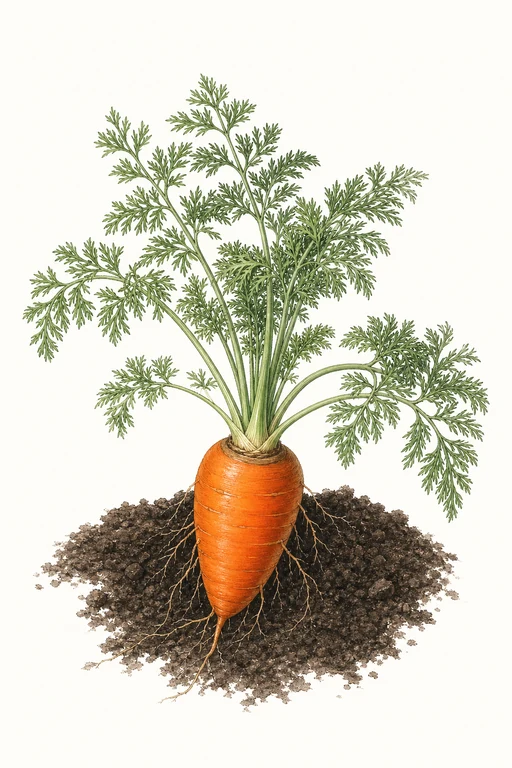
Royal Chantenay
Carrot
🌱 80d to harvest
Taproot
Sweet and richly aromatic, Royal Chantenay delivers a deep, carrot-orange harvest with a pleasantly crisp bite and fine-grained t…
Crop Dates
| Milestone | Date |
|---|---|
| Start Indoors | Direct Sow |
| Last Frost | Mar 6th |
| Transplant / Sow Outdoors | Mar 6th |
| Harvest Begins | May 25th |
| Harvest Ends | Nov 26th |
Crop Details
| Trait | Value |
|---|---|
| Days to Maturity | 80 |
| Sun Requirements | Full Sun |
| Growth Habit | Taproot |
| Support Needed | None |
| Planting Depth | Normal |
| Germination Temp (°F) | 70 |
| Min Soil Temp (°F) | 45 |
| Min Night Temp (°F) | 28 |
| Harden Off (days) | Not Required |
Recommended Companions
Frequently Asked Questions
What pest or disease commonly affects Daucus carota (carrots) like Royal Chantenay, and how can I manage it?
Carrot rust fly maggots can tunnel into roots, often showing as weakened plants and “maggoty” scars near the crown. Cover beds with fine mesh row cover after sowing and keep it in place until the roots are well established, then thin seedlings so you don’t leave overcrowded clumps that attract egg-laying. If you see damage, remove affected roots and don’t reuse that soil immediately for carrots the next season to reduce carryover of pests.
How often should I water Royal Chantenay during the main growing phase to keep roots growing well?
From emergence through root bulking (roughly weeks 4–10), keep the top 1–2 inches of soil consistently moist with light, frequent watering—usually about 1 inch per week total, adjusted for rainfall. Avoid letting the bed dry out completely and then soaking, because carrots are prone to splitting and forking when moisture swings. Mulch lightly after seedlings establish to stabilize moisture and reduce surface crusting.
How do I tell when Royal Chantenay is ready to harvest?
Harvest when the roots have reached the expected shoulder size for the variety and you can see the top of the carrot well above the soil surface, typically around 80 days from sowing. Gently pull one or two test roots: they should be firm, brightly colored, and uniform in thickness without overly small tips. If tops are still very small at day 80, wait another 1–2 weeks, but don’t leave them too long past maturity because growth slows and can become woody.