SproutSmart
SproutSmart Intelligent Garden Sowing

Savoy Ace

Cabbage
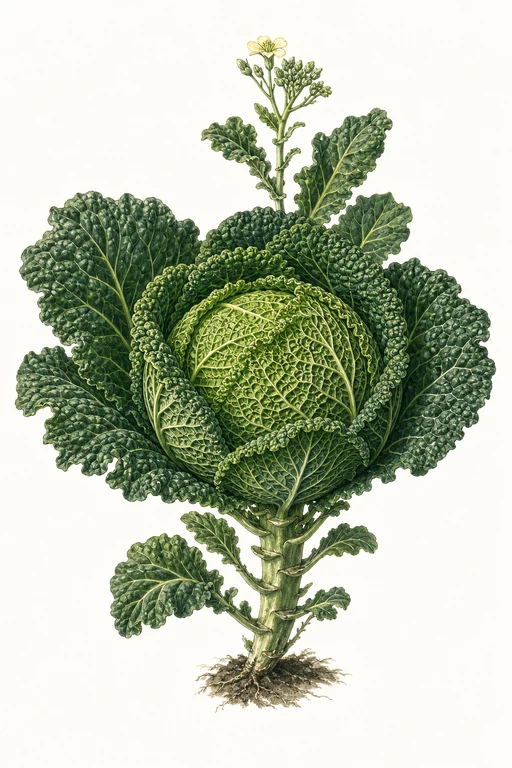
Botanical illustration of Savoy Ace
🌱 75d to harvest Rosette

Savoy Ace arrives with a lush, deeply crinkled head that feels almost velvet to the eye—tight, uniform, and richly green with a s…

Planting Schedule

Add Savoy Ace to your garden to build a schedule and get reminders.

Crop Dates

MilestoneDate
Start IndoorsJan 30th
Last FrostMar 6th
Transplant / Sow OutdoorsFeb 27th
Harvest BeginsMay 13th
Harvest EndsNov 26th

Crop Details

TraitValue
Days to Maturity75
Sun RequirementsFull SunFull sun
Growth HabitRosette
Support NeededNone
Planting DepthNormal
Germination Temp (°F)45
Min Soil Temp (°F)42
Min Night Temp (°F)32
Harden Off (days)6

Frequently Asked Questions


What pest or disease problem is most likely on Brassica oleracea (Savoy-type cabbage), and how do I manage it?
Watch for cabbage worms (cabbage looper/diamondback moth larvae) and aphids, which can chew Savoy leaves quickly. Hand-pick early, spray the foliage with an appropriate Bacillus thuringiensis (Bt) product for caterpillars, and remove heavily infested leaves; for aphids, blast with water and apply insecticidal soap. If you see yellowing with wilting or vascular browning, suspect clubroot or soilborne disease—avoid planting Brassicaceae in the same bed next season and improve drainage rather than keeping soil constantly wet.
How often should I water Savoy Ace cabbage during the main growing phase?
During head formation (roughly mid-season to the last 3–4 weeks), keep the root zone evenly moist but not waterlogged—aim for about 1 inch (2.5 cm) of water per week, adjusted for rainfall and heat. Water deeply so the soil is moist 6–8 inches down, and avoid letting the surface dry out completely because cabbage leaves can crack and growth slows. Mulch can help stabilize moisture around plants in full sun.
How can I tell when Savoy Ace cabbage is ready to harvest?
Harvest at about 75 days when heads feel firm and reach a usable size, with tightly packed leaves and minimal “give” when you gently squeeze the head. The outer leaves may look slightly thicker or more mature, and the head should hold shape rather than wobble. For best quality, cut heads in the morning before heat softens the leaves, then leave a short stem and any loose outer leaves to protect the head.
Botanical illustration of Savoy Ace

Savoy Ace arrives with a lush, deeply crinkled head that feels almost velvet to the eye—tight, uniform, and richly green with a satiny, puckered surface. Its flavor is sweet and mellow for a cool-season cabbage, with tender leaves that hold their integrity in roasts and braises, and shine in fresh salads when you want a crisp, clean bite. Grow it for dependable, 75-day performance and a harvest that looks as good as it tastes—ideal for hearty slaws, savory sautés, and comforting winter dishes.

Sowing Tips

Transplant Conditions

Wait until soil reaches 42°F and nights stay above 32°F before moving outdoors. Harden off for 6 days first.

Expert Note

For best Savoy texture and flavor, keep seedlings cool and avoid heat stress—aim to transplant when nights are consistently cool but frost is largely past.