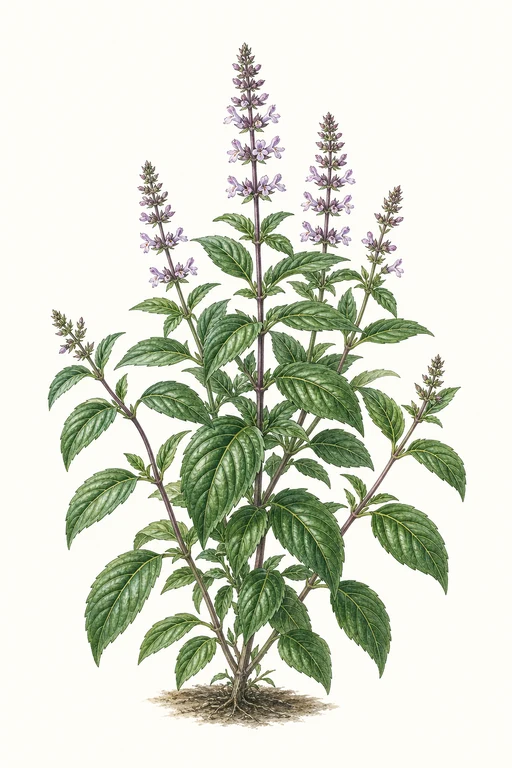
Thai
Basil
🌱 60d to harvest
Bush
Fragrant, peppery-sweet leaves unfurl with a vivid, fresh-green glow—Thai Basil’s signature aroma rises instantly, with a hint of…
Crop Dates
| Milestone | Date |
|---|---|
| Start Indoors | Jan 23rd |
| Last Frost | Mar 6th |
| Transplant / Sow Outdoors | Apr 24th |
| Harvest Begins | Jun 23rd |
| Harvest Ends | Nov 26th |
Crop Details
| Trait | Value |
|---|---|
| Days to Maturity | 60 |
| Sun Requirements | Full Sun |
| Growth Habit | Bush |
| Support Needed | None |
| Planting Depth | Normal |
| Germination Temp (°F) | 70 |
| Min Soil Temp (°F) | 60 |
| Min Night Temp (°F) | 50 |
| Harden Off (days) | 7 |
Recommended Companions
Frequently Asked Questions
What pest or disease problem commonly affects Ocimum basilicum (Thai basil), and what should I do?
Thai basil (Ocimum basilicum) is frequently hit by downy mildew and by aphids, especially in humid conditions. Improve airflow by spacing plants and watering at the base (not overhead), and remove any leaves showing yellowing patches or fuzzy growth. For aphids, spray a strong jet of water to knock them off, then repeat every 2–3 days until numbers drop.
How often should I water Thai basil during its main growing phase, and what soil moisture should I aim for?
During active growth (roughly weeks 3–8), keep soil consistently moist but never waterlogged—aim for the top 1 inch of soil to dry slightly between waterings. In full sun, this often means watering about 1–2 times per week, but only when the top inch feels dry. If leaves wilt in the afternoon and rebound by evening, you’re likely under-watering; if stems stay soggy or leaves yellow, reduce frequency.
How can I tell when Thai basil is ready to harvest?
Begin harvesting around 50–60 days after sowing when plants are well branched and have developed multiple sets of true leaves. Take the top 2–4 inches by pinching or cutting just above a leaf pair to encourage bushy regrowth, and avoid removing more than about one-third of the plant at a time. Leaves are most flavorful just before flowering; once flower spikes start forming, new leaf production slows.