SproutSmart
SproutSmart Intelligent Garden Sowing

Thyme De Provence

Thyme

Planting Schedule

Add Thyme De Provence to your garden to build a schedule and get reminders.
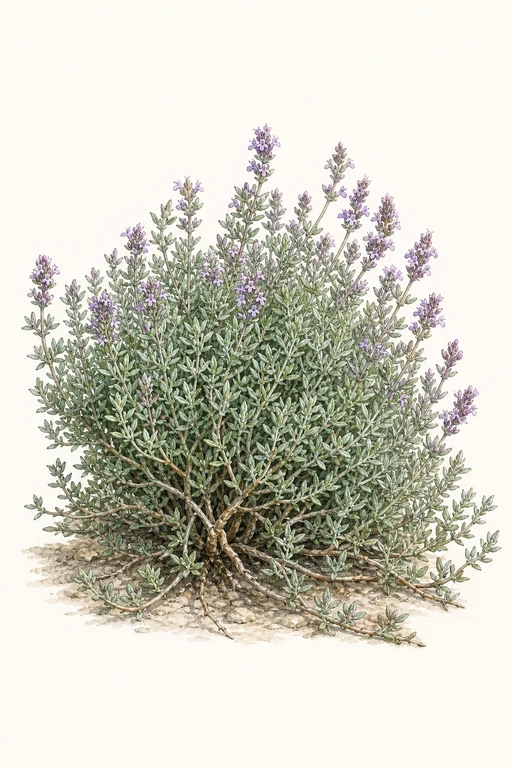
Botanical illustration of Thyme De Provence
90d to harvest

Breathe in the silvery-green foliage of Thyme De Provence and you’ll find it immediately—an aromatic, Provençal perfume with a bright, savory lift and a gentle, piney warmth. At maturity, the small, tightly clustered leaves form a dense, velvety mat that’s wonderfully resilient, holding its character through the season. Grow it for fragrant bouquets and herb-forward flavoring in roasts, sauces, and marinades, or for drying and infusing—this is the thyme gardeners reach for when they want depth with a clean, herbal finish.

Crop Dates

MilestoneDate
Start IndoorsJan 9th
Last FrostMar 6th
Transplant / Sow OutdoorsApr 17th
Harvest BeginsJul 16th
Harvest EndsNov 26th

Crop Details

TraitValue
Days to Maturity90
Sun RequirementsFull SunFull sun
Growth HabitUpright
Support NeededNone
Planting DepthNormal
Germination Temp (°F)70
Min Soil Temp (°F)60
Min Night Temp (°F)50
Harden Off (days)10

Frequently Asked Questions


How do I manage a common thyme problem like powdery mildew (Thymus vulgaris)?
Powdery mildew often shows up as a white, dusty coating on thyme leaves, especially in humid, crowded growth. Keep plants spaced for airflow and water at the soil line so foliage stays dry; remove and discard heavily affected stems to prevent spread. If it keeps recurring, spray with horticultural-grade potassium bicarbonate or neem (follow label directions) and repeat as directed until new growth is clear.
How often should I water Thyme vulgaris during the main growing phase?
During active growth (roughly spring through early summer), water deeply only when the top 1 inch of soil feels dry. Thyme (Thymus vulgaris) prefers dry-to-average moisture and will decline with persistent damp soil, so avoid daily misting and do not keep the root zone constantly wet. In-ground plants usually need less once established; in containers, check more often because they dry faster.
Botanical illustration of Thyme De Provence

Breathe in the silvery-green foliage of Thyme De Provence and you’ll find it immediately—an aromatic, Provençal perfume with a bright, savory lift and a gentle, piney warmth. At maturity, the small, tightly clustered leaves form a dense, velvety mat that’s wonderfully resilient, holding its character through the season. Grow it for fragrant bouquets and herb-forward flavoring in roasts, sauces, and marinades, or for drying and infusing—this is the thyme gardeners reach for when they want depth with a clean, herbal finish.