
Thymus Vulgaris 'German Winter
Thyme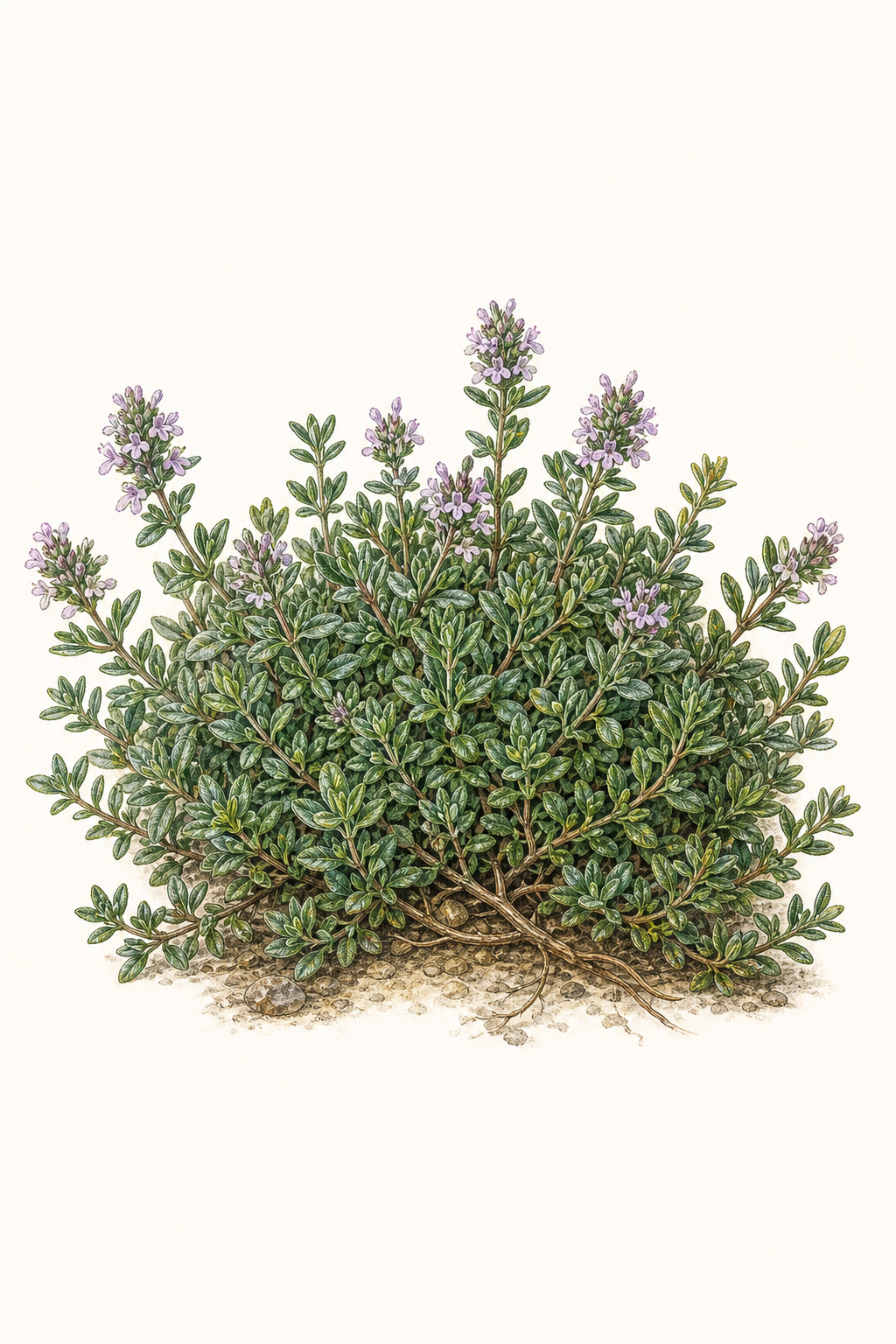
Breathe in the crisp, resinous perfume of Thymus vulgaris ‘German Winter’—a hardy thyme that carries a cool, evergreen intensity …
Crop Dates
| Milestone | Date |
|---|---|
| Start Indoors | Jan 23rd |
| Last Frost | Mar 6th |
| Transplant / Sow Outdoors | Mar 20th |
| Harvest Begins | May 19th |
| Harvest Ends | Nov 26th |
Crop Details
| Trait | Value |
|---|---|
| Days to Maturity | 60 |
| Sun Requirements | Full Sun |
| Growth Habit | Upright |
| Support Needed | None |
| Planting Depth | Normal |
| Germination Temp (°F) | 70 |
| Min Soil Temp (°F) | 45 |
| Min Night Temp (°F) | 35 |
| Harden Off (days) | 7 |
Recommended Companions
Frequently Asked Questions
What pests or diseases commonly affect Thymus vulgaris (thyme), and how do I treat them at home?
How often should I water Thymus vulgaris during the main growing phase?
How can I tell when Thymus vulgaris is ready to harvest?
Breathe in the crisp, resinous perfume of Thymus vulgaris ‘German Winter’—a hardy thyme that carries a cool, evergreen intensity with a gently peppery, savory warmth. At maturity, its tiny leaves form a dense, velvety mat of deep green foliage, releasing aromatic oils readily for bold flavor in every garden moment. Ideal for drying and for seasoning blends, this dependable perennial is prized for its year-round presence and its ability to elevate sauces, roasted vegetables, and pickling brines with unmistakable thyme character.
Sowing Tips

Transplant Conditions
Wait until soil reaches 45°F and nights stay above 35°F before moving outdoors. Harden off for 7 days first.
Expert Note

Start indoors for best uniformity, but this is a hardy thyme—harden well and give full sun plus sharply draining soil to prevent root rot.