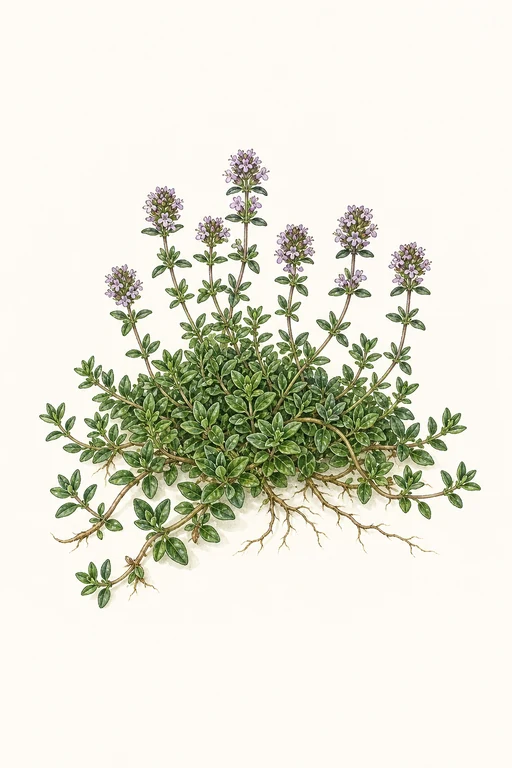
Creeping
60d to harvest
Creeping thyme drapes with a fragrant, mossy carpet—its tiny leaves release a bright, herbal perfume at the slightest touch. At maturity, the foliage forms a low, spreading mat with a fine, velvety texture and a clean, savory flavor that shines in herb-forward blends. Ideal for fresh garnishing and for seasoning roasts, soups, and sauces where its aromatic character can perfume the whole dish.
Crop Dates
| Milestone | Date |
|---|---|
| Start Indoors | Direct Sow |
| Last Frost | Feb 9th |
| Transplant / Sow Outdoors | Feb 9th |
| Harvest Begins | Apr 10th |
| Harvest Ends | Dec 9th |
Crop Details
| Trait | Value |
|---|---|
| Days to Maturity | 60 |
| Sun Requirements | Full Sun |
| Growth Habit | Spreading |
| Support Needed | None |
| Planting Depth | Surface |
| Germination Temp (°F) | 65 |
| Min Soil Temp (°F) | 45 |
| Min Night Temp (°F) | 40 |
| Harden Off (days) | 7 |
Recommended Companions
Frequently Asked Questions
What pest or disease most commonly affects creeping thyme (Thymus serpyllum), and how can I prevent it?
Creeping thyme commonly suffers from root rot when the soil stays wet, often showing as wilting plus blackened roots and a patchy die-back. Let the bed dry slightly between waterings and plant in gritty, fast-draining soil; if rot appears, pull out affected plugs and improve drainage rather than trying to “save” them with extra watering. Keep airflow by not over-thickening the mat, especially in humid weather.
How do I tell when creeping thyme (Thymus serpyllum) is ready to harvest?
Harvest at about 60 days from sowing when the plants form a dense, low mat with lots of small leaves and active new growth. Snip stems in the morning when oils are strongest, taking no more than one-third of the growth at a time to keep the mat dense. If you’re harvesting for flavor, do a first harvest just before or as flowers start to open for the best balance of aroma.