
Early Purple Sprouting
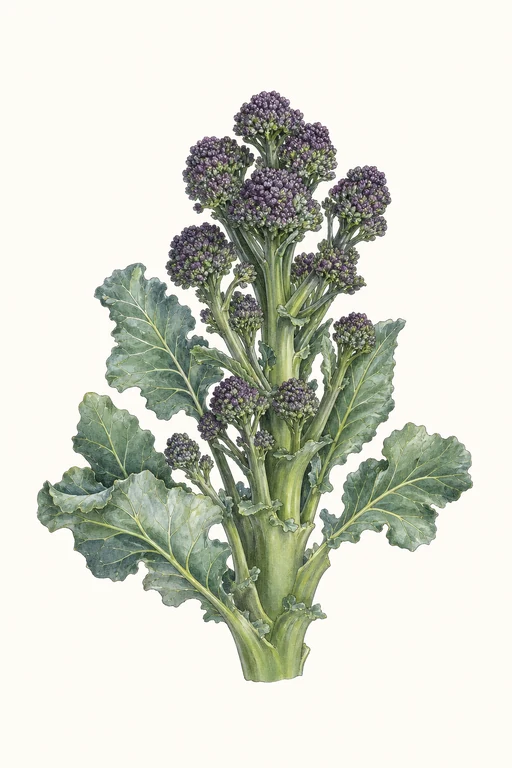
Tender, jewel-toned sprouts emerge with a deep violet blush that fades to fresh green as they mature—an unmistakably early harves…
Crop Dates
| Milestone | Date |
|---|---|
| Start Indoors | Jan 12th |
| Last Frost | Feb 9th |
| Transplant / Sow Outdoors | Feb 9th |
| Harvest Begins | Apr 15th |
| Harvest Ends | Dec 9th |
Crop Details
| Trait | Value |
|---|---|
| Days to Maturity | 65 |
| Sun Requirements | Full Sun |
| Growth Habit | Upright |
| Support Needed | None |
| Planting Depth | Normal |
| Germination Temp (°F) | 45 |
| Min Soil Temp (°F) | 40 |
| Min Night Temp (°F) | 30 |
| Harden Off (days) | 6 |
Recommended Companions


Frequently Asked Questions
What pest or disease most commonly affects Brassica oleracea var. italica (early purple sprouting) and how do I control it?
How often should I water early purple sprouting during the main growing phase?
How can I tell when early purple sprouting is ready to harvest?
Tender, jewel-toned sprouts emerge with a deep violet blush that fades to fresh green as they mature—an unmistakably early harvest with a crisp, sweet bite. Expect compact heads and finely textured florets that stay pleasantly firm, ideal for showcasing their natural flavor in springtime displays. Early Purple Sprouting is a favorite for gardeners who want a reliable, season-starting sprouting broccoli with abundant, harvest-ready growth over time.
Sowing Tips

Transplant Conditions
Wait until soil reaches 40°F and nights stay above 30°F before moving outdoors. Harden off for 6 days first.
Expert Note

For the earliest tender shoots, give plants plenty of light and consistent moisture after transplanting—purple sprouting styles are sensitive to heat spikes.