
Early White
Cabbage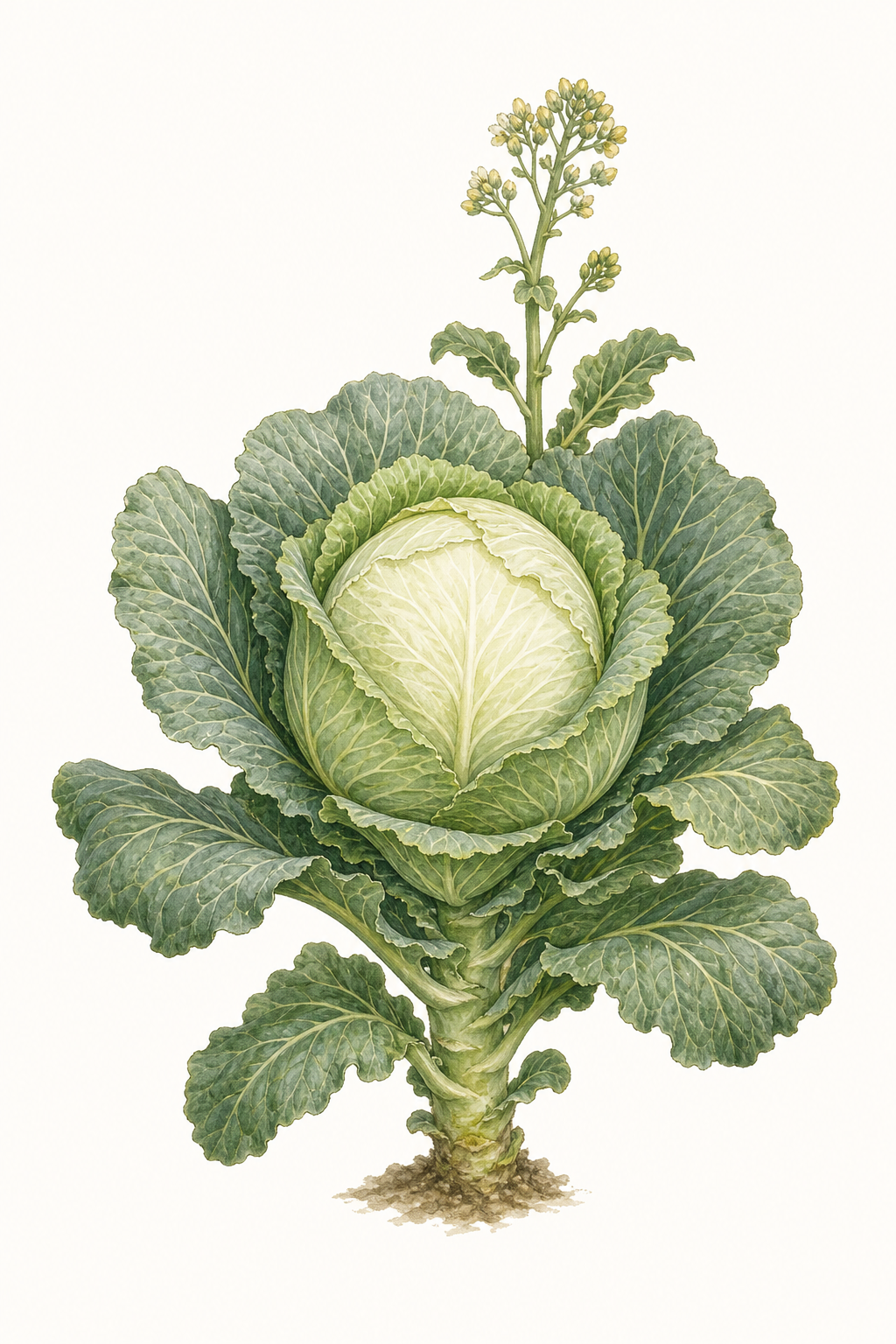
Crisp and luminous, Early White forms tight, round heads with a clean, pale-green to creamy-white interior that feels cool and sn…
Crop Dates
| Milestone | Date |
|---|---|
| Start Indoors | Jan 12th |
| Last Frost | Feb 9th |
| Transplant / Sow Outdoors | Feb 9th |
| Harvest Begins | Apr 5th |
| Harvest Ends | Dec 9th |
Crop Details
| Trait | Value |
|---|---|
| Days to Maturity | 55 |
| Sun Requirements | Full Sun |
| Growth Habit | Rosette |
| Support Needed | None |
| Planting Depth | Normal |
| Germination Temp (°F) | 85 |
| Min Soil Temp (°F) | 40 |
| Min Night Temp (°F) | 35 |
| Harden Off (days) | 6 |
Recommended Companions
Frequently Asked Questions
Why are my Brassica oleracea var. capitata (cabbage, Early White) leaves turning yellow and developing holes, and what should I do?
How often should I water Brassica oleracea var. capitata during its main head-forming phase?
How can I tell when my Early White cabbage is ready to harvest?
Crisp and luminous, Early White forms tight, round heads with a clean, pale-green to creamy-white interior that feels cool and snappy at first touch. Expect a fine, tender crunch and a mild, sweet cabbage flavor that shines in quick fresh preparations and classic slaws, while also holding its own for braising and hearty winter-style dishes. A dependable 55-day favorite for gardeners who want early harvests without sacrificing that satisfying, garden-fresh bite.
Sowing Tips

Transplant Conditions
Wait until soil reaches 40°F and nights stay above 35°F before moving outdoors. Harden off for 6 days first.
Expert Note

Start indoors in small batches so transplants go out when nights are reliably above freezing and protect from cold snaps with row cover if needed.