
Giant Red Celery
Celery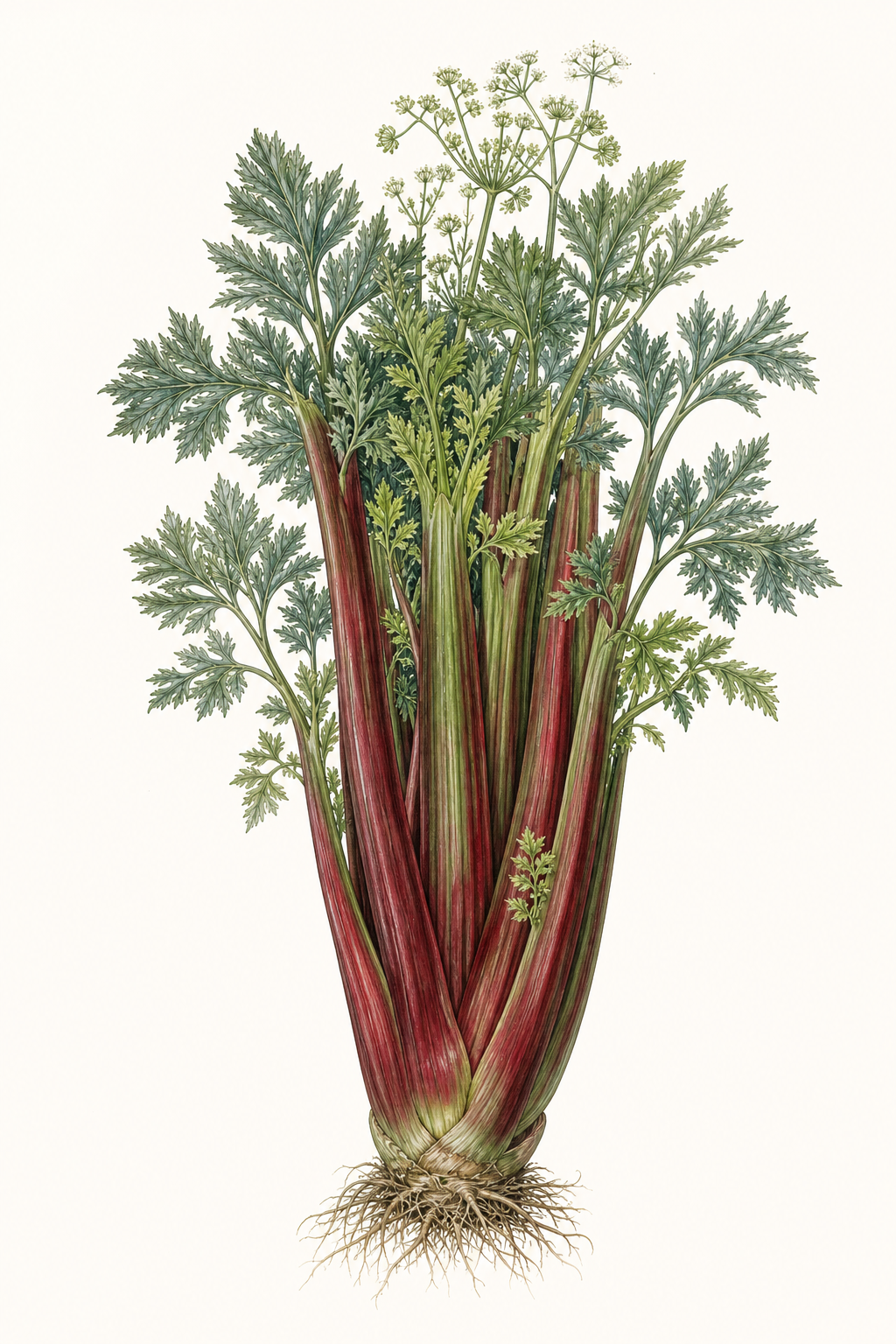
Crisp as cool riverstone, Giant Red Celery rises with bold, ruby-tinged stalks that stay tender and bright through the season. Ex…
Crop Dates
| Milestone | Date |
|---|---|
| Start Indoors | Nov 17th |
| Last Frost | Feb 9th |
| Transplant / Sow Outdoors | Mar 23rd |
| Harvest Begins | Jun 21st |
| Harvest Ends | Dec 9th |
Crop Details
| Trait | Value |
|---|---|
| Days to Maturity | 90 |
| Sun Requirements | Part Sun |
| Growth Habit | Upright |
| Support Needed | None |
| Planting Depth | Normal |
| Germination Temp (°F) | 70 |
| Min Soil Temp (°F) | 40 |
| Min Night Temp (°F) | 35 |
| Harden Off (days) | 7 |
Recommended Companions
Frequently Asked Questions
What’s the most common pest or disease problem on Apium graveolens (giant red celery), and how do I manage it?
How often should I water giant red celery during its main growing phase, and what soil moisture target should I keep?
How can I tell when giant red celery is ready to harvest?
Crisp as cool riverstone, Giant Red Celery rises with bold, ruby-tinged stalks that stay tender and bright through the season. Expect a clean, aromatic snap and a gently sweet, celery-forward flavor that shines in fresh bunches and shines again when simmered into savory preparations. Grow it for impressive garden presence and dependable harvest—ideal for gardeners who want both beauty and a standout crunch in every use.
Sowing Tips

Transplant Conditions
Wait until soil reaches 40°F and nights stay above 35°F before moving outdoors. Harden off for 7 days first.
Expert Note

Start celery early indoors and keep seedlings evenly moist; transplant into deeply prepared soil and avoid letting the crown dry out or it can stunt and toughen.