SproutSmart
SproutSmart Intelligent Garden Sowing

Hera

Dill
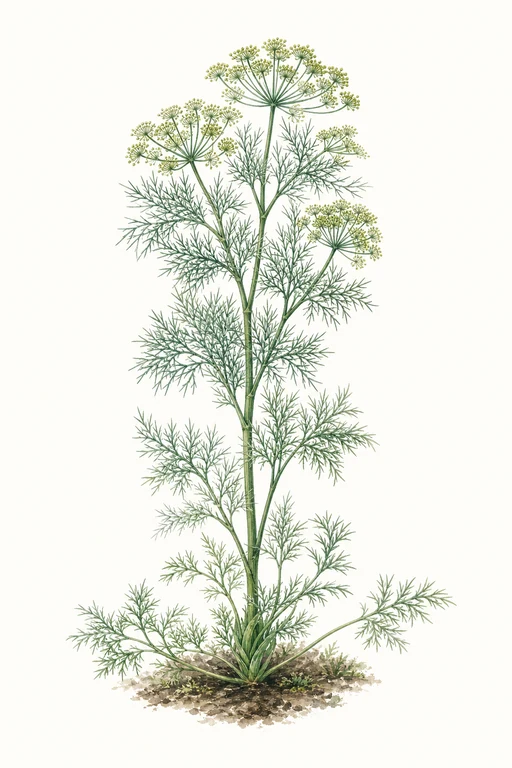
Botanical illustration of Hera
🌱 55d to harvest Upright

Fragrant and richly aromatic from the first feathery fronds, Hera dill unfurls into a lush, upright plant with a clean, sweet-her…

Planting Schedule

Add Hera to your garden to build a schedule and get reminders.

Crop Dates

MilestoneDate
Start IndoorsDirect Sow
Last FrostFeb 9th
Transplant / Sow OutdoorsFeb 9th
Harvest BeginsApr 5th
Harvest EndsDec 9th

Crop Details

TraitValue
Days to Maturity55
Sun RequirementsFull SunFull sun
Growth HabitUpright
Support NeededNone
Planting DepthNormal
Germination Temp (°F)70
Min Soil Temp (°F)50
Min Night Temp (°F)28
Harden Off (days)Not Required

Frequently Asked Questions


What pest or disease commonly affects Anethum graveolens (dill), and how can I manage it?
Dill commonly suffers from fungal leaf spots (often promoted by humid, crowded foliage) and can attract aphids on young growth. Improve airflow by thinning seedlings to stand about 6–8 in (15–20 cm) apart and water at the soil line to keep leaves dry. If leaf spots appear, remove affected foliage and spray with an organic copper fungicide per label directions; for aphids, hose off with water and repeat as needed before infestations build.
How often should I water dill during its main growing phase, and what soil moisture target should I aim for?
During active growth (from emergence through leaf production), keep the top 1 in (2–3 cm) of soil consistently moist but not waterlogged. Water about 1–2 times per week, increasing frequency during hot, dry spells, and reduce watering if the soil stays soggy or the plant looks stressed with yellowing.
How can I tell when Anethum graveolens is ready to harvest (leaves and seeds)?
For leaf harvest, start picking when plants are well established and reach roughly 8–12 in (20–30 cm) tall—use leaves anytime up to flowering, but harvest regularly to encourage fresh growth. For seed harvest, wait until flowering umbels turn brown and dry on the plant; cut the umbels and dry them further until seeds loosen easily.
Botanical illustration of Hera

Fragrant and richly aromatic from the first feathery fronds, Hera dill unfurls into a lush, upright plant with a clean, sweet-herb character and a bright, cooling finish. The foliage is finely textured and tender, holding its color beautifully for fresh use while developing a fuller, more pungent dill flavor as it matures. Ideal for dill-forward flavoring in pickles, brines, and herb blends, Hera’s steady growth makes it a standout for gardeners who love dependable, garden-fresh fragrance at about 55 days.

Sowing Tips

Transplant Conditions

Wait until soil reaches 50°F and nights stay above 28°F before moving outdoors.

Expert Note

For the longest harvest window, succession-sow dill every 2–3 weeks and keep it well-watered while it establishes.