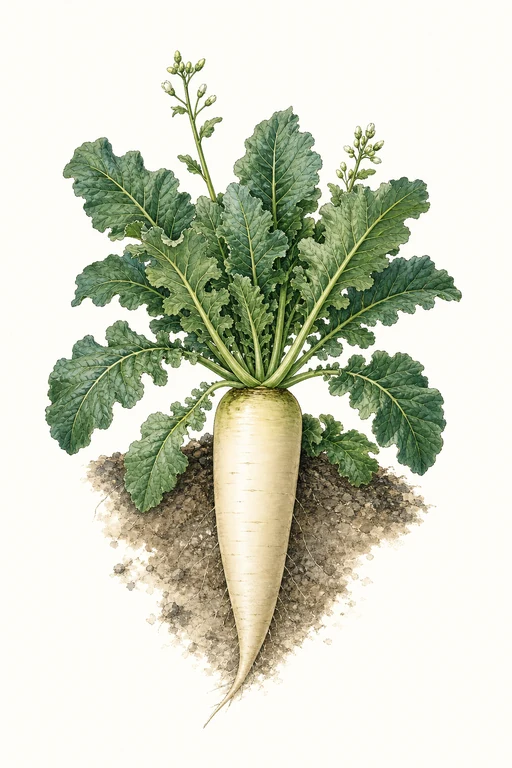
Korean Mu
Radish
🌱 55d to harvest
Taproot
Crisp at first bite, Korean Mu forms a long, elegant winter radish with a clean, bright bite and a pleasantly mild heat that ling…
Crop Dates
| Milestone | Date |
|---|---|
| Start Indoors | Direct Sow |
| Last Frost | Feb 9th |
| Transplant / Sow Outdoors | Feb 9th |
| Harvest Begins | Apr 5th |
| Harvest Ends | Dec 9th |
Crop Details
| Trait | Value |
|---|---|
| Days to Maturity | 55 |
| Sun Requirements | Full Sun |
| Growth Habit | Taproot |
| Support Needed | None |
| Planting Depth | Normal |
| Germination Temp (°F) | 55 |
| Min Soil Temp (°F) | 45 |
| Min Night Temp (°F) | 28 |
| Harden Off (days) | Not Required |
Recommended Companions
Frequently Asked Questions
What pest or disease most often affects winter radish (Raphanus sativus), and how do I treat it?
Flea beetles commonly attack radish seedlings in Brassicaceae, leaving tiny shot holes on leaves. Use floating row cover immediately after sowing and keep it on until plants are well established; if damage appears, spray a labeled insecticidal soap and repeat as directed. For disease, watch for clubroot (swollen, distorted roots) and avoid planting in the same bed—remove infected plants and use fresh or amended soil to reduce recurrence.
How often should I water Korean mu (winter radish, Raphanus sativus) during the main growing phase?
After germination, keep soil consistently evenly moist but not waterlogged, especially from when roots start swelling until harvest. Water deeply about 1–2 times per week depending on your soil and rainfall; aim for moisture at the root zone so the bed doesn’t dry out between waterings. If the soil swings between very dry and very wet, roots are more likely to become woody or crack.
How can I tell when Korean mu (Raphanus sativus) is ready to harvest?
Harvest at about 55 days when the roots have reached the expected size for your sowing spacing and the shoulders look full and firm. Gently pull one plant to check root diameter—if the root is still thin or elongated, give it more time. Once the roots are firm to the touch, harvest promptly because overgrown winter radish can become tougher and more pungent.