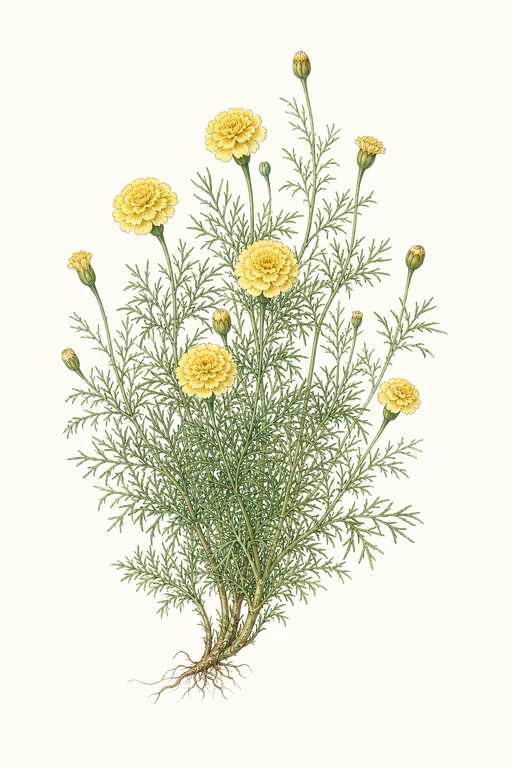
Lemon Gem
Marigold
🌱 50d to harvest
Clumping
Sunlit, lemony blooms open like tiny fireworks—warm butter-yellow petals with a crisp, fragrant snap that carries a bright citrus…
Crop Dates
| Milestone | Date |
|---|---|
| Start Indoors | Jan 12th |
| Last Frost | Feb 9th |
| Transplant / Sow Outdoors | Feb 9th |
| Harvest Begins | Mar 31st |
| Harvest Ends | Dec 9th |
Crop Details
| Trait | Value |
|---|---|
| Days to Maturity | 50 |
| Sun Requirements | Full Sun |
| Growth Habit | Clumping |
| Support Needed | None |
| Planting Depth | Surface |
| Germination Temp (°F) | 70 |
| Min Soil Temp (°F) | 50 |
| Min Night Temp (°F) | 32 |
| Harden Off (days) | 7 |
Recommended Companions
Frequently Asked Questions
What pest or disease most commonly affects Tagetes tenuifolia (Lemon Gem), and how do I treat it at home?
The most common issue is leaf-damaging aphids and whiteflies, which cluster on tender growth and can cause sticky honeydew. Spray plants with a strong jet of water, then follow with insecticidal soap (especially underside of leaves) every 4–7 days until activity stops. If you see gray-brown fungal spots, remove affected leaves and avoid overhead watering to keep foliage dry.
How often should I water Lemon Gem (Tagetes tenuifolia) during the main growing phase?
During active growth, keep the soil consistently lightly moist but never soggy—water when the top 1 inch of soil feels dry. Water at the base early in the day and aim to wet the root zone thoroughly, then let excess drain so the crown doesn’t stay wet. In hot weather, this often becomes about 2–3 waterings per week, but always adjust to your soil and rainfall.
How can I tell when Lemon Gem is ready to harvest at about 50 days?
Harvest readiness is usually when plants are producing plenty of small, fragrant flowers and the foliage is well-developed—typically around 50 days from germination. For the best flavor and aroma, pick blooms in the morning after the dew dries, before the heat softens scent and texture. If grown for edible flowers/foliage, harvest regularly to encourage more blooming rather than waiting for full seed maturity.