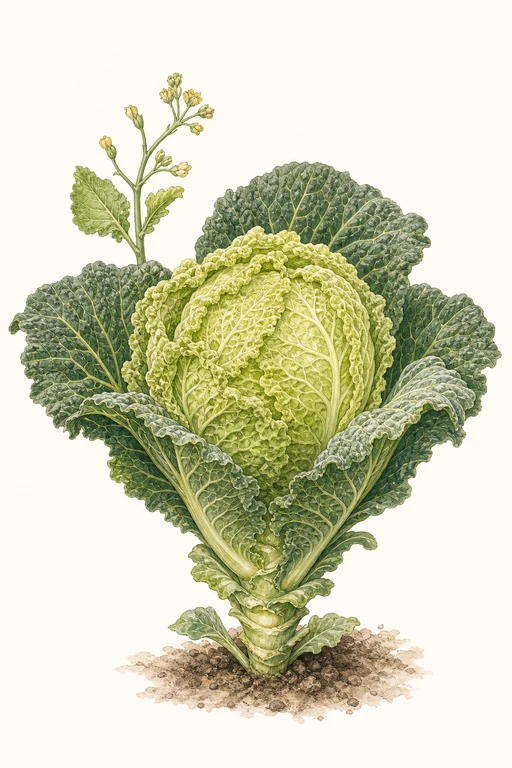
Napa Chardonnay
Cabbage
🌱 55d to harvest
Rosette
Crisp, cool-to-the-touch leaves unfurl in a tight, elegant head with a softly savoyed texture—like fine green lace gathered into …
Crop Dates
| Milestone | Date |
|---|---|
| Start Indoors | Jan 12th |
| Last Frost | Feb 9th |
| Transplant / Sow Outdoors | Feb 9th |
| Harvest Begins | Apr 5th |
| Harvest Ends | Dec 9th |
Crop Details
| Trait | Value |
|---|---|
| Days to Maturity | 55 |
| Sun Requirements | Full Sun |
| Growth Habit | Rosette |
| Support Needed | None |
| Planting Depth | Normal |
| Germination Temp (°F) | 75 |
| Min Soil Temp (°F) | 45 |
| Min Night Temp (°F) | 32 |
| Harden Off (days) | 6 |
Recommended Companions
Frequently Asked Questions
What pests or diseases most commonly affect Brassica oleracea var. capitata (cabbage) and how do I treat them?
Watch for cabbage worms (importantly cabbage looper/diamondback-type caterpillars) and aphids, which can rapidly defoliate young heads. Hand-pick caterpillars early and spray with an insecticidal soap or Bacillus thuringiensis (Bt) in the evening; repeat every 5–7 days until you stop seeing new feeding. For disease, avoid overhead watering and improve airflow because downy mildew/fungal leaf spots spread fast in cool, wet weather—remove badly affected outer leaves and keep plants mulched and evenly moist, not soggy.
How often should I water Brassica oleracea var. capitata during the main growing phase, and what soil moisture level should I aim for?
During head formation (roughly mid-season until harvest), keep soil consistently evenly moist by watering about 1–2 times per week, but adjust to weather so the top 1 inch dries slightly between waterings. Use deep watering so moisture reaches the root zone; frequent light sprinkles encourage shallow roots and make stress more likely. Mulch around the base helps prevent the big dry–wet swings that can lead to cracked or poorly formed heads.
How can I tell when Brassica oleracea var. capitata is ready to harvest?
Harvest at about 55 days when heads feel firm and reach their typical size for your spacing, and the outer leaves are fully developed but not overly aged. If you gently squeeze the head, it should feel tight and heavy with minimal give. Leave a little time if heads are still loose, but don’t let them overstay once they firm up, because heads can split as conditions fluctuate.