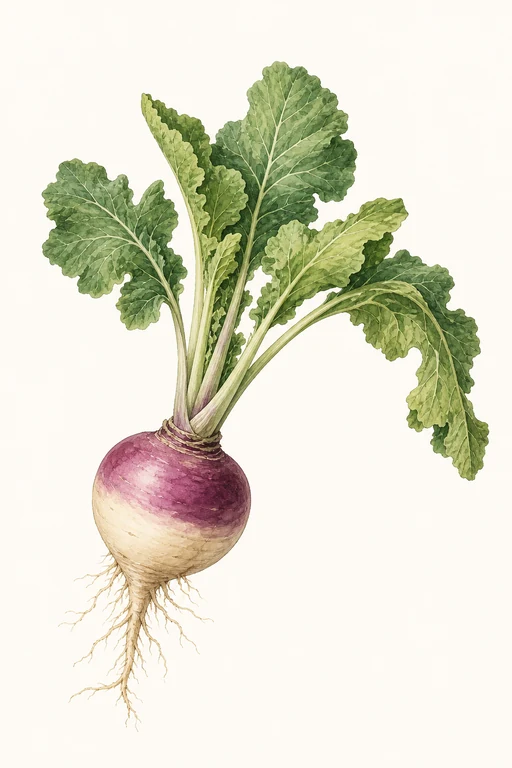
Purple Plum
28d to harvest
Sweetly peppery and vividly crisp, Purple Plum radish brings a jewel-toned crunch to the garden—its skin is a deep plum-purple that fades to a clean, tender white at the tip. At just 28 days, roots stay pleasantly slender and snappy, delivering a fresh, juicy bite that shines in salad mixes and bright garnishes. Grow a small stand for quick harvests and enjoy the striking color that makes every platter look freshly picked.
Crop Dates
| Milestone | Date |
|---|---|
| Start Indoors | Direct Sow |
| Last Frost | Feb 9th |
| Transplant / Sow Outdoors | Feb 9th |
| Harvest Begins | Mar 9th |
| Harvest Ends | Dec 9th |
Crop Details
| Trait | Value |
|---|---|
| Days to Maturity | 28 |
| Sun Requirements | Full Sun |
| Growth Habit | Taproot |
| Support Needed | None |
| Planting Depth | Normal |
| Germination Temp (°F) | 55 |
| Min Soil Temp (°F) | 45 |
| Min Night Temp (°F) | 28 |
| Harden Off (days) | Not Required |
Recommended Companions
Frequently Asked Questions
How do I manage common pests or diseases on Raphanus sativus (purple plum radish) in my garden?
Watch for flea beetles, which can leave small shot-holes in radish leaves and reduce root growth—use floating row cover from sowing until harvest and handpick heavily damaged plants. If you see pale, stippled leaves or silvery scarring, target thrips with insecticidal soap, applied in the cool morning, and remove badly infested leaves. For disease, avoid wet foliage and rotate beds, since overcrowded, damp conditions increase the risk of downy mildew and other leaf spotting that can affect yield.
How can I tell when purple plum radish (Raphanus sativus) is ready to harvest?
Harvest when the roots have filled out—typically about 28 days after sowing—and when the shoulder of the radish is clearly visible above the soil. For best eating, pull radishes as soon as they reach a thumbnail-to-dime sized diameter, because they become woody and can turn strong-flavored if left in the ground. If you want a milder radish, start checking from day 25 and harvest the earliest ones first.