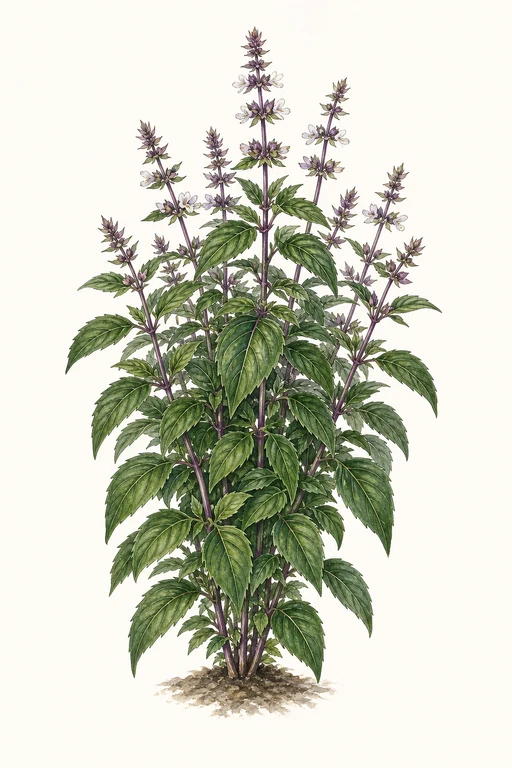
Queenette
Basil
🌱 45d to harvest
Bush
Queenette Thai Basil unfurls with a fragrant, anise-citrus lift that rises from deep green leaves as soon as they’re brushed—an a…
Crop Dates
| Milestone | Date |
|---|---|
| Start Indoors | Jan 12th |
| Last Frost | Feb 9th |
| Transplant / Sow Outdoors | Apr 6th |
| Harvest Begins | May 21st |
| Harvest Ends | Dec 9th |
Crop Details
| Trait | Value |
|---|---|
| Days to Maturity | 45 |
| Sun Requirements | Full Sun |
| Growth Habit | Bush |
| Support Needed | None |
| Planting Depth | Normal |
| Germination Temp (°F) | 70 |
| Min Soil Temp (°F) | 60 |
| Min Night Temp (°F) | 50 |
| Harden Off (days) | 10 |
Recommended Companions
Frequently Asked Questions
Why are my Ocimum basilicum (Thai basil/“Queenette”) plants getting black spots or wilting, and what can I do?
Check the undersides of leaves for small sap-sucking insects (often aphids) and look for leaf spotting that spreads after cool, wet weather—both commonly flare in crowded, damp foliage. Remove badly affected leaves, water at the soil line (not on the foliage), and improve airflow by spacing plants so leaves don’t stay wet. If aphids are present, rinse them off with a strong spray and repeat every 2–3 days until new growth is clean.
How often should I water Ocimum basilicum during the main growing phase, and what soil moisture target should I maintain?
Water Queenette when the top 1 inch (2–3 cm) of soil feels dry; aim for evenly moist soil, not soggy. During active leaf growth (after seedlings establish), this usually means deep watering about 2–3 times per week in warm weather, but less in cooler periods. Consistent moisture helps prevent stress-related leaf drop and keeps growth compact.
How do I know when Ocimum basilicum (“Queenette”) is ready to harvest?
Start harvesting when plants are about 6–8 inches tall and have multiple sets of true leaves—typically around day 45, depending on conditions. Harvest in the morning by snipping above a leaf pair to encourage branching; take only up to about one-third of the plant at a time. When flowering begins, leaves can taste sharper, so harvest regularly before heavy flowering for the best flavor.