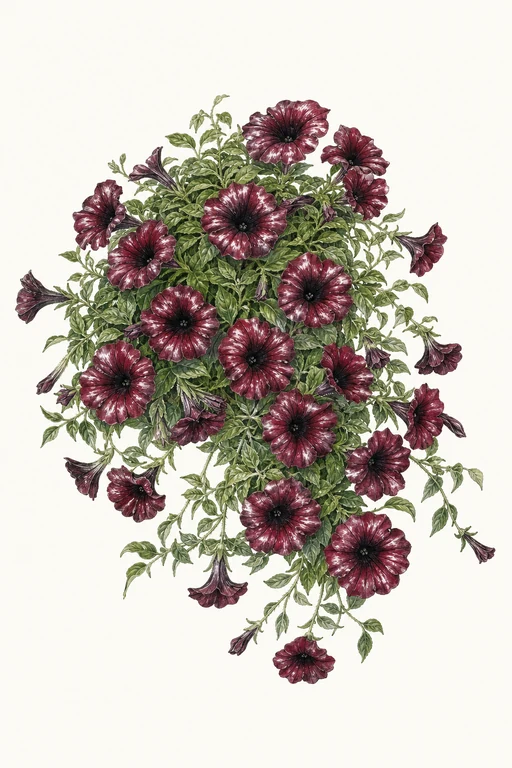
Ramblin' Burgundy Chrome
Petunia
🌱 70d to harvest
Spreading
Velvety petals unfurl in a mesmerizing chrome-sheen of burgundy and plum, with a softly glowing center that seems to catch the li…
Crop Dates
| Milestone | Date |
|---|---|
| Start Indoors | Direct Sow |
| Last Frost | Feb 9th |
| Transplant / Sow Outdoors | Apr 6th |
| Harvest Begins | Jun 15th |
| Harvest Ends | Dec 9th |
Crop Details
| Trait | Value |
|---|---|
| Days to Maturity | 70 |
| Sun Requirements | Full Sun |
| Growth Habit | Spreading |
| Support Needed | None |
| Planting Depth | Surface |
| Germination Temp (°F) | 75 |
| Min Soil Temp (°F) | 60 |
| Min Night Temp (°F) | 55 |
| Harden Off (days) | 7 |
Recommended Companions
Frequently Asked Questions
What pest or disease most commonly affects Petunia × atkinsiana (Ramblin' Burgundy Chrome), and what should I do?
Watch for aphids and botrytis (gray mold), especially in cool, humid weather or if plants stay wet overnight. For aphids, spray plants with a strong jet of water, then repeat every 2–3 days for a week; for persistent issues use insecticidal soap. To prevent botrytis, improve airflow by spacing plants properly and remove any gray, mushy blooms or leaves immediately, watering at the soil line rather than over the foliage.
How often should I water Petunia × atkinsiana during peak growth (about weeks 4–10 after planting)?
Keep the soil consistently moist but not soggy—water when the top 1 inch of soil feels dry to the touch. In full sun, petunias often need deep watering about 1–2 times per week, but containers may require more frequent checks (sometimes daily during hot spells). Avoid letting plants sit in standing water, which increases the risk of root issues and botrytis.
How can I tell when Petunia × atkinsiana is ready to harvest or to cut back?
Petunia “harvest” is typically cutting for blooms: start cutting when flowers are fully colored and open, usually around 70 days from germination for your timing. For best regrowth, deadhead spent blossoms and the attached seed pods as soon as they start to fade, cutting back to just above the next set of healthy leaves. If growth becomes leggy, shear the plant back by about one-third to two-thirds to restart flowering.