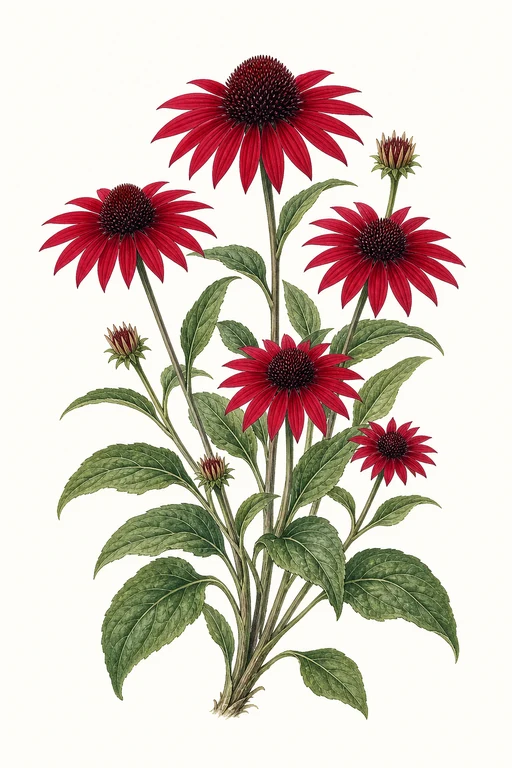
Rubinstern (Ruby Star)
Echinacea
🌱 70d to harvest
Upright
Rubinstern (Ruby Star) blooms with a radiant, ruby-red brilliance that seems to glow above sturdy, upright stems—petals that flar…
Crop Dates
| Milestone | Date |
|---|---|
| Start Indoors | Dec 15th |
| Last Frost | Feb 9th |
| Transplant / Sow Outdoors | Mar 23rd |
| Harvest Begins | Jun 1st |
| Harvest Ends | Dec 9th |
Crop Details
| Trait | Value |
|---|---|
| Days to Maturity | 70 |
| Sun Requirements | Full Sun |
| Growth Habit | Upright |
| Support Needed | None |
| Planting Depth | Normal |
| Germination Temp (°F) | 70 |
| Min Soil Temp (°F) | 60 |
| Min Night Temp (°F) | 50 |
| Harden Off (days) | 7 |
Recommended Companions
Frequently Asked Questions
What’s a common pest or disease on Echinacea purpurea (purple coneflower) and how can I fix it?
Echinacea purpurea is commonly affected by powdery mildew, especially in humid weather and when plants are crowded. Improve airflow by spacing plants and watering at the soil line (not the leaves), then spray with a labeled fungicide at the first signs of white powdery growth. Remove heavily infected leaves early to slow spread.
How often should I water Echinacea purpurea during its main growing phase?
During active growth (after plants establish and before flowering), keep soil evenly moist but not soggy—aim for watering about 1 inch per week total, split into 1–2 deep waterings if needed. Let the top 1–2 inches of soil dry between waterings to prevent root stress and reduce mildew risk. Once established, it will tolerate some dryness, but consistent moisture helps it form strong stems and flowers.
How do I know when to harvest or cut back Echinacea purpurea (Ruby Star) at the right time?
For cut flowers, harvest when the ray petals (the pink-purple “daisy” petals) are fully open and the central cone is firm and visibly developed, typically around 70 days from sowing. For seed, leave the flower heads until the cones turn dark and crisp and seeds start to loosen—then cut heads and finish drying indoors. Deadhead spent blooms to encourage additional flowering, cutting back to just above a healthy leaf set.