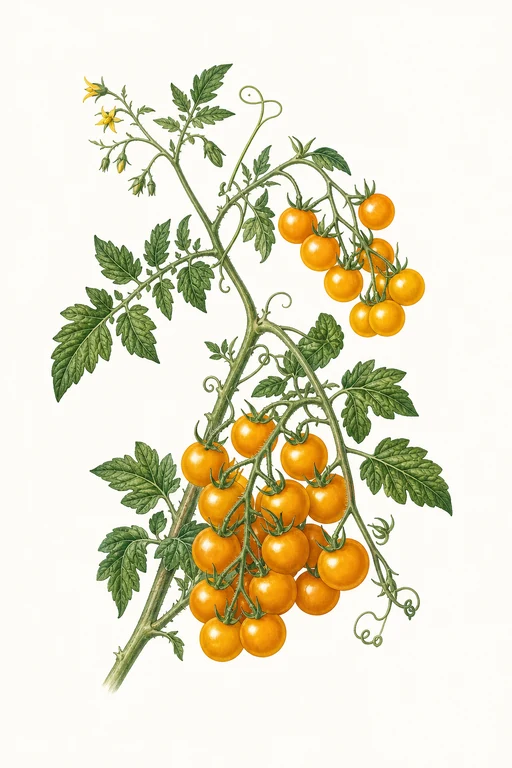
Sunshine Cherry
Tomato
🌱 60d to harvest
Determinate
Sunshine Cherry bursts with a sweet, sun-warmed flavor and a bright, juicy snap—small fruits that feel like edible jewels. Its gl…
Crop Dates
| Milestone | Date |
|---|---|
| Start Indoors | Dec 22nd |
| Last Frost | Feb 9th |
| Transplant / Sow Outdoors | Apr 6th |
| Harvest Begins | Jun 5th |
| Harvest Ends | Dec 9th |
Crop Details
| Trait | Value |
|---|---|
| Days to Maturity | 60 |
| Sun Requirements | Full Sun |
| Growth Habit | Determinate |
| Support Needed | Cage |
| Planting Depth | Deep |
| Germination Temp (°F) | 75 |
| Min Soil Temp (°F) | 60 |
| Min Night Temp (°F) | 50 |
| Harden Off (days) | 8 |
Recommended Companions
Frequently Asked Questions
What pest or disease most commonly affects Solanum lycopersicum (Sunshine Cherry) and how can I control it?
Early blight is a common problem on tomato (Solanum lycopersicum), showing as dark, target-like spots on older leaves that spread upward in warm, humid weather. Remove and discard infected leaves early, water at the soil line (not the foliage), and spray with an approved copper-based fungicide or chlorothalonil according to label directions at the first signs to protect new growth. Space plants for airflow and keep leaves as dry as possible to slow disease spread.
How often should I water Sunshine Cherry during peak fruiting, and what soil moisture level should I aim for?
During peak fruiting, keep soil consistently moist but not soggy—aim for evenly damp soil about 1–2 inches deep. Water deeply 1–3 times per week depending on heat and rainfall, increasing frequency during hot spells, and reduce watering if leaves start to droop from dryness between waterings. Mulching around the base helps prevent the wet-dry swings that can cause blossom-end rot and fruit cracking.
How do I know when Sunshine Cherry tomatoes are ready to harvest?
Harvest when fruits are fully colored (bright yellow/golden for Sunshine Cherry) and are slightly firm but not hard—cherry tomatoes should be easy to pull from the vine with minimal twisting. Do a taste test if color is near-ready: ripe fruits will be sweet and aromatic rather than grassy or sharp. For best flavor, pick frequently as they ripen (often every few days) so the plant keeps setting new fruit.